
Many MBA applicants begin in the wrong place. They open a blank page and try to sound impressive immediately. That usually creates polished confusion. Strong essays are rarely born from instant inspiration. They are built through decisions.
The first real challenge is not wording. It is focus. What story deserves space? What lesson still matters? What future path feels earned rather than borrowed?
That is why the smartest writers treat the essay as a process, not a performance. A clear system beats random bursts of motivation almost every time.
The good news is simple: writing a strong MBA essay can be broken into steps. Once the mystery disappears, progress gets easier.
Step 1: Understand the Prompt Before Writing Anything
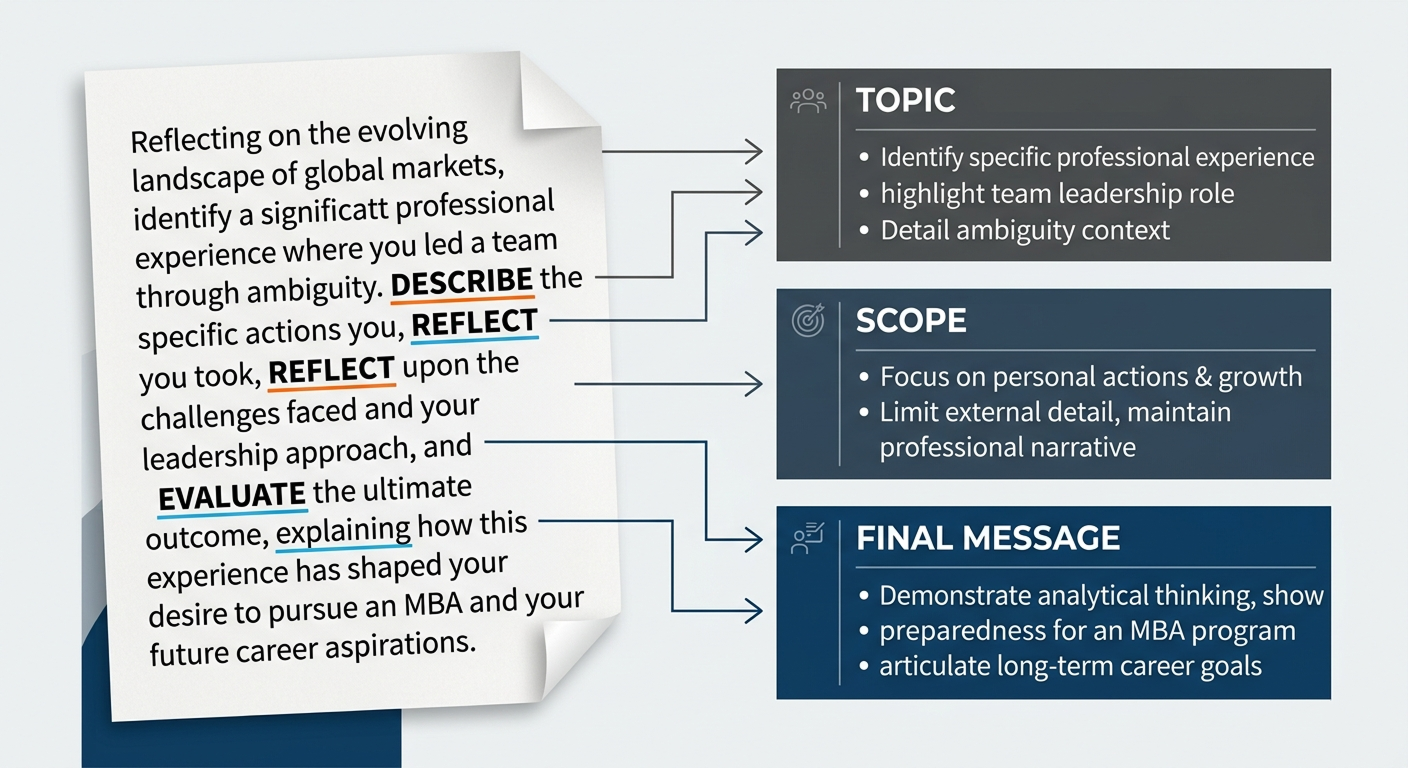
Many applicants write elegant answers to the wrong question. Painful mistake. Before drafting, the prompt should be studied with care.
This Prompt decoding framework starts with verbs. If the school asks to describe, reflect, explain, or evaluate, each verb signals a different response style.
Quick Prompt Breakdown
- What is the school asking to learn?
- What themes are required?
- How much space is available?
- What should be proved by the end?
A smart MBA admissions essay strategy begins here, not with sentence polishing.
Step 2: Choose One Story That Has Real Weight
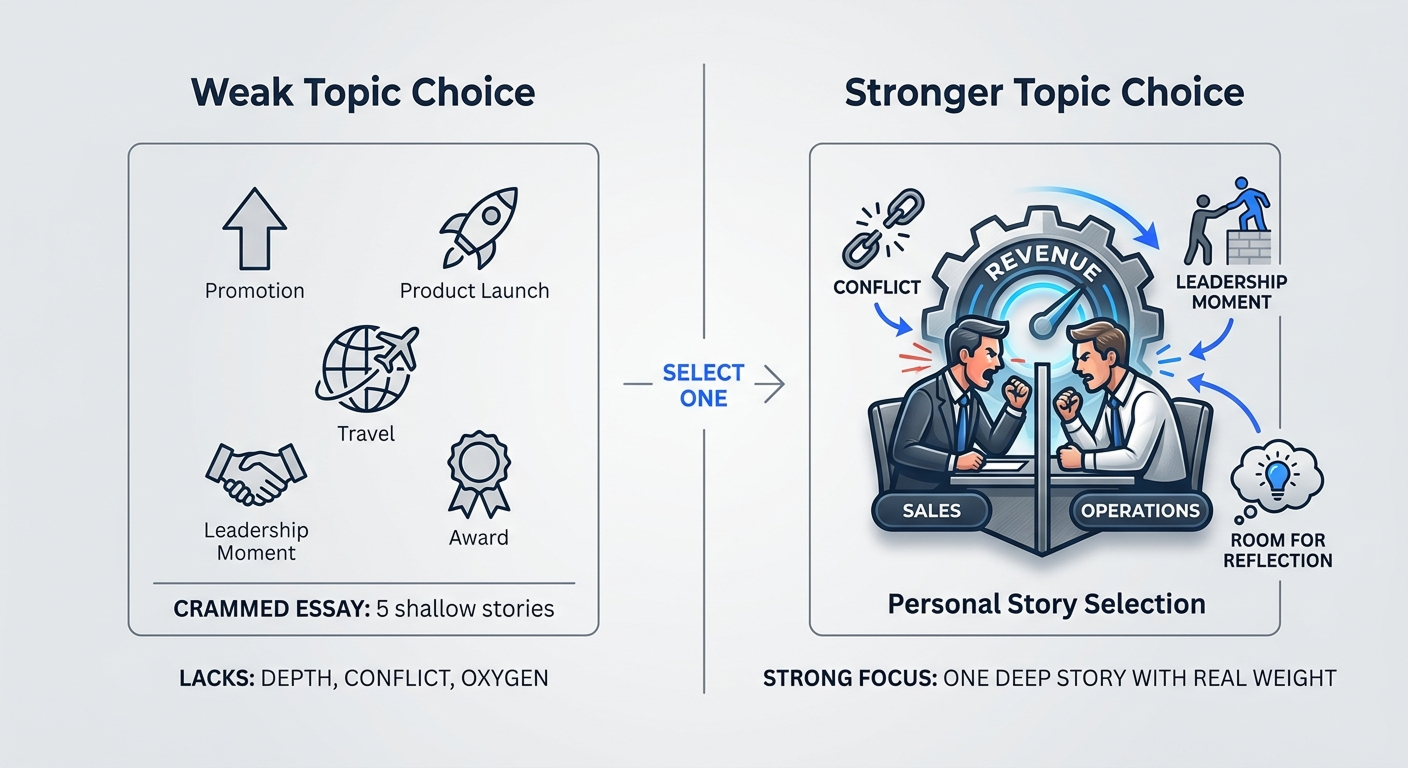
Applicants often have too many usable experiences. Promotions, launches, crises, travel, leadership moments. The problem is abundance, not shortage.
Strong essays usually center one story with depth instead of five stories with no oxygen. This is Personal story selection.
Weak Topic Choice
Won an internal performance award.
Stronger Topic Choice
Repaired trust between sales and operations after months of blame that had damaged revenue.
The second story contains conflict, leadership, and room for reflection.
Stories That Often Work
- a Leadership challenge example with resistance;
- a mistake that changed behavior;
- a Career pivot narrative with logic behind it;
- a values conflict under pressure;
- a moment where success exposed a new gap.
Step 3: Build the Core Message Before the Draft
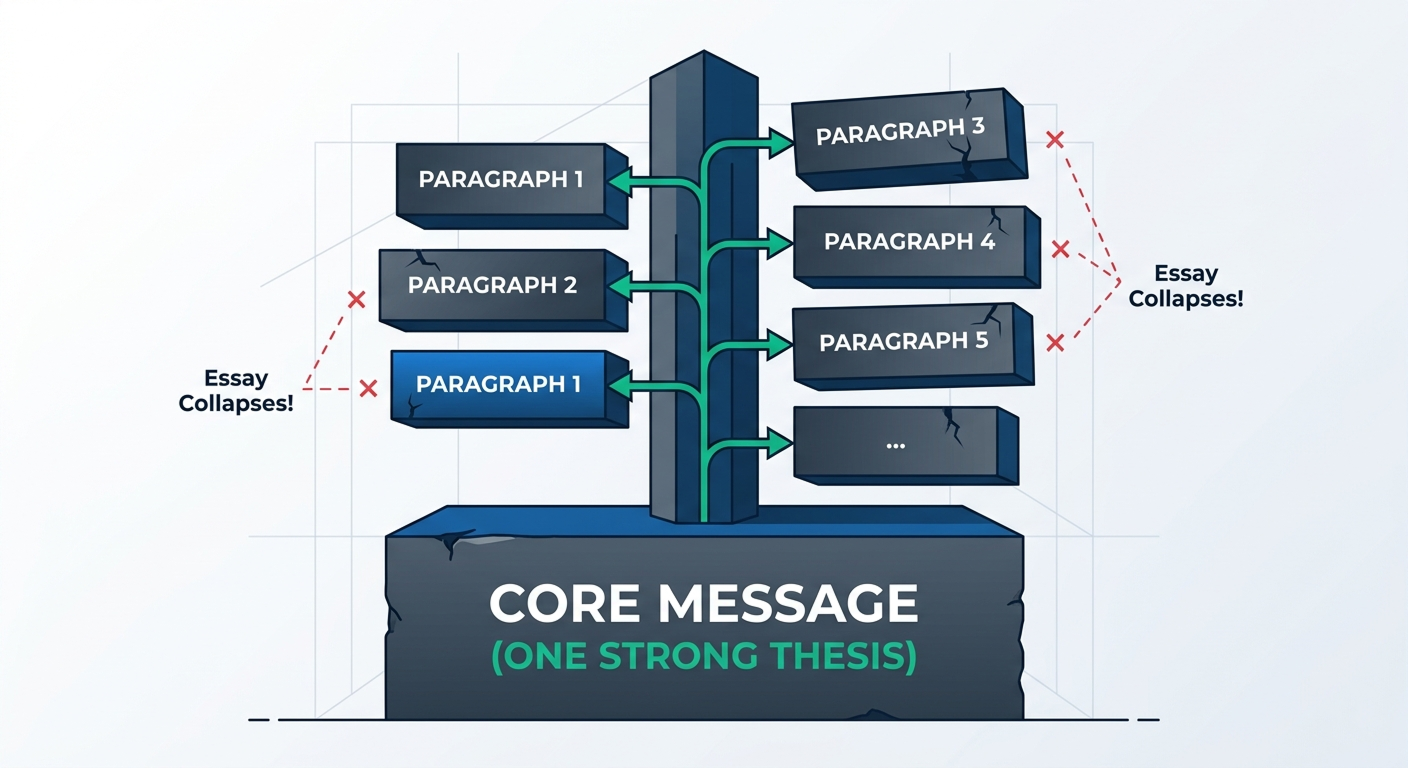
Once the story is chosen, the writer needs one sentence explaining what the essay truly means. This is Core message development.
Weak Core Message
I am hardworking and ready for business school.
Stronger Core Message
After succeeding as an operator, he realized strategic judgment had become the limit of his growth.
Now every paragraph can serve that idea.
Without a core message, essays wander politely from one decent paragraph to another.
Step 4: Create a Strong Outline
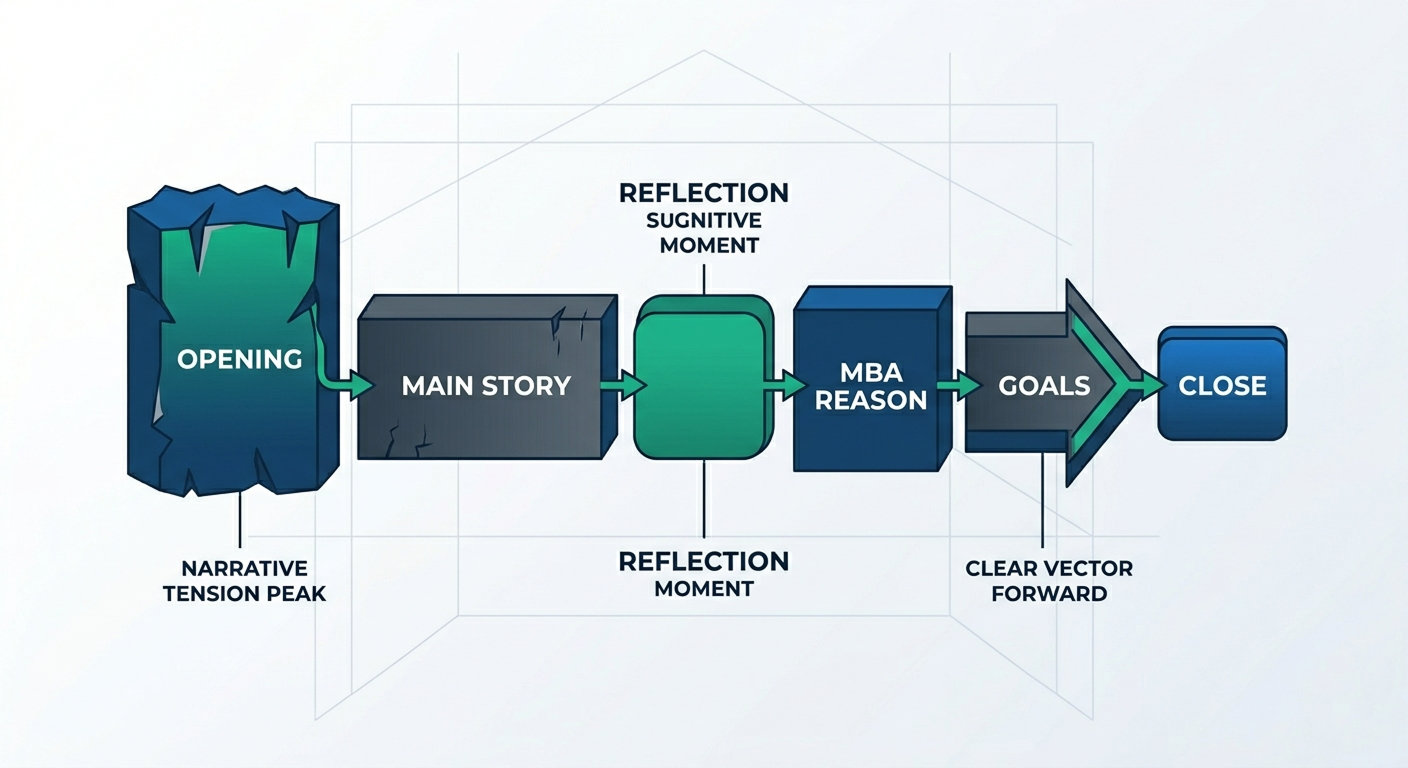
Drafting without structure often leads to repetition, panic edits, and bloated paragraphs. A short outline solves much of that early.
This MBA essay outline system can fit on one page.
| Section | Purpose |
| Opening | Create tension or curiosity |
| Main Story | Show actions and results |
| Reflection | Explain what changed internally |
| MBA Reason | Show current gap and next step |
| Goals | Define future direction |
| Close | Leave momentum |
Anyone asking how to outline an mba essay usually needs less complexity, not more.
This basic mba application essay structure works because readers process it naturally.
Step 5: Write a First Draft With Proof, Not Performance
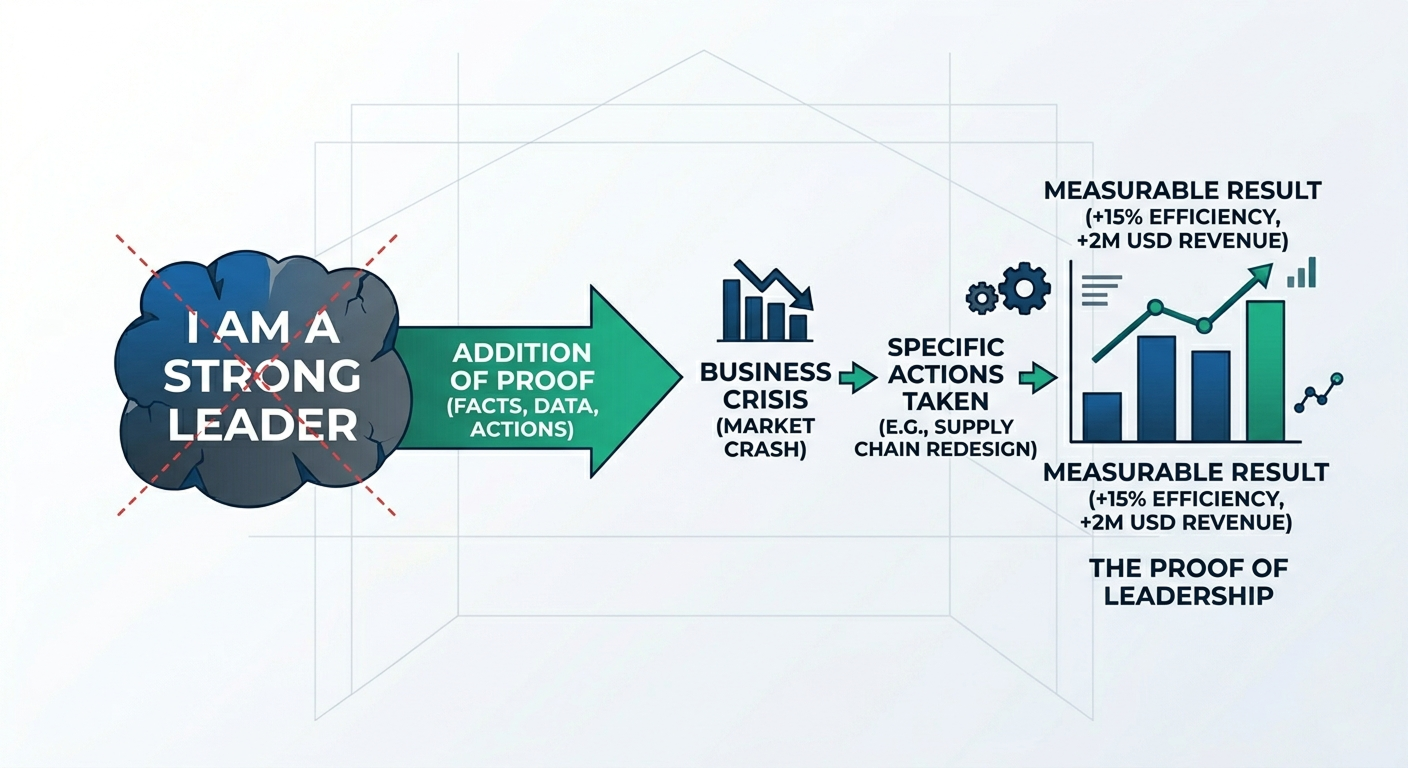
The first draft should focus on substance. Fancy wording can wait. The writer needs evidence first.
This is where Evidence-based storytelling matters. Claims should be followed by scenes, actions, or measurable outcomes.
Weak Claim
I became a stronger leader.
Better Proof
During a product recall, she balanced legal caution, engineering delays, and customer anger while choosing daily public updates. Refund requests rose briefly, then trust scores recovered.
Now leadership is visible.
Hook Opening Strategy
The first paragraph should wake the reader up.
- a difficult decision;
- a mistake with consequences;
- a contradiction after success;
- a tense moment that changed priorities.
Readers remember movement more than claims.
Step 6: Explain Why MBA, Why Now, and Why This School

This is where many essays become generic. The applicant finally reaches the business school part and starts speaking in brochure language.
Resist that urge.
Why MBA Reasoning
The degree should solve a real limitation.
After leading operations across three markets, Elena realized she could improve systems but lacked the finance depth to defend larger investment decisions.
Why Now Timing Logic
Timing matters. Why not two years later? Why not now?
- Current ceiling has become visible.
- Promotion increased responsibility.
- Industry shift created opportunity.
- Experience is mature enough to contribute now.
School Fit Research Method
Do not praise rankings and stop there. Show practical fit.
Because he plans to scale healthcare operations, he is drawn to the school’s analytics lab, hospital partnerships, and alumni leaders already solving similar problems.
That feels researched rather than flattering.
Step 7: Revise Harder Than You Drafted
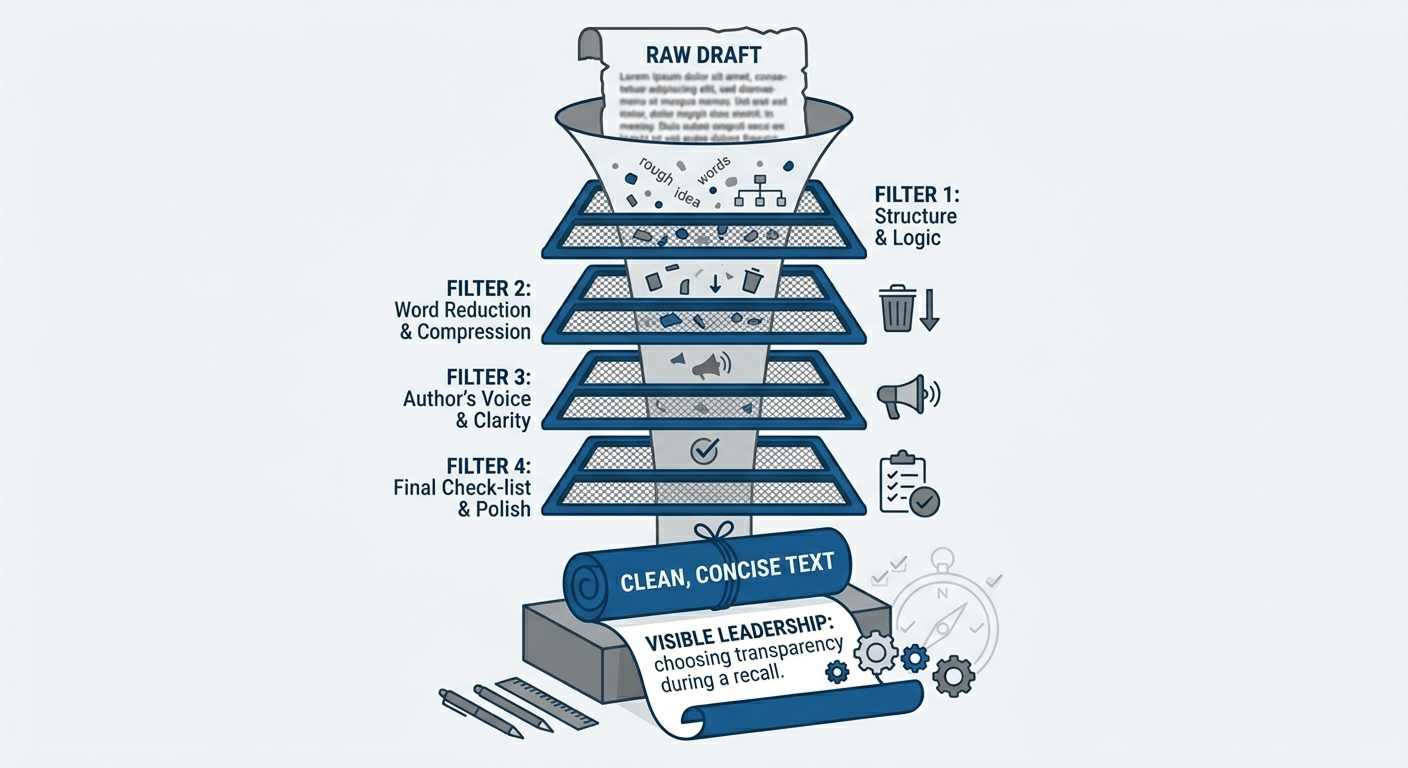
Many applicants overvalue first drafts. Strange habit. Most strong essays are rewritten, tightened, and clarified.
This Draft revision workflow should happen in layers.
Revision Round One: Structure
- Does each paragraph have a job?
- Does the story move forward?
- Are goals connected to the past?
Revision Round Two: Word Limit Compression
Cut repetition. Remove soft phrases. Replace three weak sentences with one strong one.
| Weak Version | Better Version |
| I was able to successfully lead the project team. | I led the project team through delays and conflict. |
Revision Round Three: Authentic Voice Technique
If the essay sounds written by a committee, soften it. If every sentence sounds over-engineered, simplify it.
Real confidence is calm.
Revision Round Four: Final Polish Checklist
- no repeated ideas;
- no vague goals;
- no empty praise of the school;
- no dramatic claims without proof;
- no awkward ending.
How to Format an MBA Essay Without Overthinking It
Many applicants worry too much about spacing, fonts, or margins. If the school provides rules, follow them exactly. If not, keep formatting clean and readable.
- standard professional font;
- consistent spacing;
- readable paragraph breaks;
- no decorative styling;
- clear title only if requested.
Anyone searching how to format an mba essay should remember that layout supports clarity. It does not replace clarity.
Common Mistakes That Hurt Strong Candidates
[додати зображення згідно H2 – вказати атрибут alt = текст h2]
Good candidates often damage their own essays through habits that feel harmless.
- Trying to sound impressive instead of honest.
- Using three stories when one would be stronger.
- Goals with no logical path.
- Overexplaining context.
- Ending with gratitude instead of momentum.
Some applicants use an essay writing service for mba support at this stage. Outside editing can help, but only if the original voice remains visible.
What a Strong MBA Essay Usually Feels Like
It feels clear before it feels clever. It feels honest before it feels polished. It feels directed.
The reader can sense who this person was, what changed, and why business school now makes sense. That is enough. More than enough, sometimes.
A great MBA essay rarely tries to be brilliant in every line. It simply becomes difficult to forget.