The most reliable way to learn how to write an expository essay is to build it from the questions a curious newcomer would ask about the topic, in the order they would ask them. Each answer becomes a paragraph, the order of questions becomes the structure, and the essay explains without ever needing an opinion.
Two Paragraphs on the Same Lighthouse
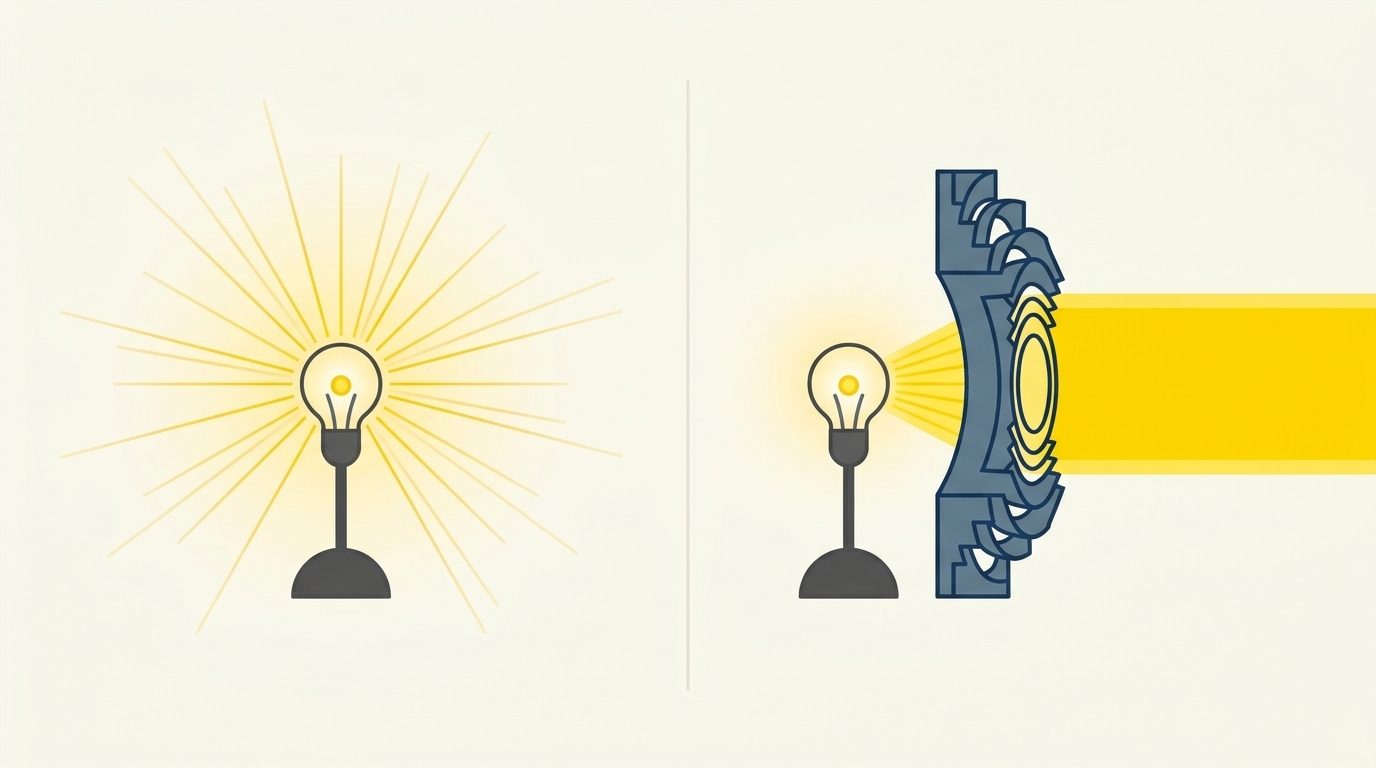
Most weak expository paragraphs come straight from research notes. The facts are right, but they arrive in the order the writer found them.
Built From Research Notes
The Fresnel lens was invented by Augustin Fresnel and first installed in a lighthouse in 1823. It uses concentric rings of glass prisms. Earlier lighthouses used mirrors. Fresnel lenses are much thinner than ordinary lenses of the same size. They made lighthouse beams visible from much farther away.
Built From Reader Questions
Before the 1820s, a lighthouse beam depended on polished mirrors, and much of the light escaped in the wrong directions. The Fresnel lens, first installed in a French lighthouse in 1823, solved this with one idea: instead of a single thick lens, it surrounded the lamp with rings of glass prisms, each bending light toward the same horizontal beam. The result worked like a giant magnifying glass without the weight of solid glass, and it sent a lighthouse’s light far out to sea.
The second version answers, in order, what a curious reader would ask: what came before, what the invention is, how it works and what it changed. That is the whole method in miniature. Strong model papers, whether from an instructor, a writing center or an essay service, tend to follow the same question order even when their headings never show it.
The Question Chain Method in Brief
The question chain treats how to write an expository essay as a conversation with one newcomer. The writer lists the questions that person would ask, answers each with evidence and orders the answers so every paragraph leads naturally to the next question. Most topics draw on some version of these six:
- “What is it?”
- “Where would I have seen it?”
- “How does it work?”
- “Why does it work that way?”
- “What are its limits?”
- “Why does it matter?”
Not every topic needs all six, and many add questions of their own. The principle underneath, writing for someone who does not know the material yet, runs through the main expository essay guide.
Pass One: Collect the Reader’s Questions
Goal: a raw list of everything a newcomer would want to know.
- Imagine explaining the topic aloud to one specific person outside the course.
- Write down every question that person would ask, without filtering.
- Stop at around ten, then cross out any question that needs an opinion to answer.
On the page: For “How does a lighthouse lens send light so far?”, the raw list read: “Why not just use a brighter lamp?”, “What did lighthouses use before?”, “What do the glass rings do?”, “Why is it shaped like a beehive?”, “How do ships tell lighthouses apart?”, “Are these lenses still used?” and “Which lighthouse is the most beautiful?” The last one was crossed out, since no fact can answer it.
A topic suits this method when it produces plenty of genuine questions. Running that quick test on a few ideas from a list of expository essay topics shows which ones will fill an essay.
Pass Two: Answer Each Question With Evidence
Goal: a short, sourced answer to every question left on the list.
- Answer each question in two or three sentences of notes.
- Record the source beside every answer.
- Merge questions whose answers overlap.
On the page: “What do the glass rings do?” Each ring is a prism that bends light from the lamp toward the horizon, so light that would scatter upward or downward joins the main beam. [source noted]
Turning the Biggest Answer Into a Thesis
One question sits underneath all the others, usually the working question itself. Here it is how the lens sends light so far, and its answer, compressed into one sentence, becomes the thesis:
The Fresnel lens sends light far out to sea by surrounding a single lamp with rings of prisms that bend scattered light into one concentrated beam, a design that replaced heavy mirrors and made lighthouses visible at much greater distances.
The guide to the expository essay thesis shows how the same move works for other patterns.
Pass Three: Arrange the Answers Into an Essay
Goal: put the answers in the order that lets each one prepare the next.
Sorting Questions Into Sections
Opening Questions
“Where would I have seen it?” and “What did lighthouses use before?” give familiar ground and context.
Body Questions
“What do the glass rings do?”, “Why is it shaped like a beehive?” and “How do ships tell lighthouses apart?” carry the mechanism, each answer depending on the one before.
Closing Questions
“Are these lenses still used?” looks at where the explanation leads without adding new detail.
Stitching One Answer to the Next
Each paragraph should end where the next question naturally begins. After explaining how the rings bend light, the paragraph can close on the fact that many lenses turn, which sets up the question of how ships tell one lighthouse from another. How these links work across the classic patterns of exposition is covered in the guide to expository essay structure.
The Lighthouse Essay, Assembled
Each paragraph below is labeled with the reader question it answers.
Bending Light to the Horizon
[Where have I seen one?] Anyone who has visited an old lighthouse has probably seen the lens at the top: a glass shape like a beehive, often taller than a person, ringed with ridges of glass. [What came before it?] Before the 1820s, lighthouses relied on lamps backed by polished metal mirrors, and much of their light escaped upward, downward or sideways, where no ship could see it. The Fresnel lens sends light far out to sea by surrounding a single lamp with rings of prisms that bend scattered light into one concentrated beam, a design that replaced heavy mirrors and made lighthouses visible at much greater distances.
[What do the rings do?] Each ring of glass is a prism, cut at an angle that bends the light passing through it. Rings near the middle bend light slightly, while rings near the top and bottom bend it sharply, so rays heading in many directions leave the lens traveling together toward the horizon.
[Why the beehive shape?] A single solid lens strong enough to do the same job would be enormously thick and heavy. Breaking that curve into separate rings keeps the bending power while removing most of the glass, which is why the lens looks like a stack of glass bands rather than one smooth dome.
[How do ships tell them apart?] Many lenses were built to rotate, so a ship sees the beam as a flash each time a panel of the lens sweeps past. Each lighthouse was given its own pattern of flashes, and sometimes its own color, which lets sailors identify it at night.
[Are they still used?] Many of these lenses have since been replaced by modern lights, and some now sit in museums. The principle has lasted longer: the same ringed design appears in car headlights, projectors and the flat magnifying sheets sold for reading small print.
The labels show that the structure came from the chain of questions, not from a template. Finished work in other patterns, each with notes on what earns the grade, is collected among the expository essay examples.
One Evening or One Week With the Question Chain
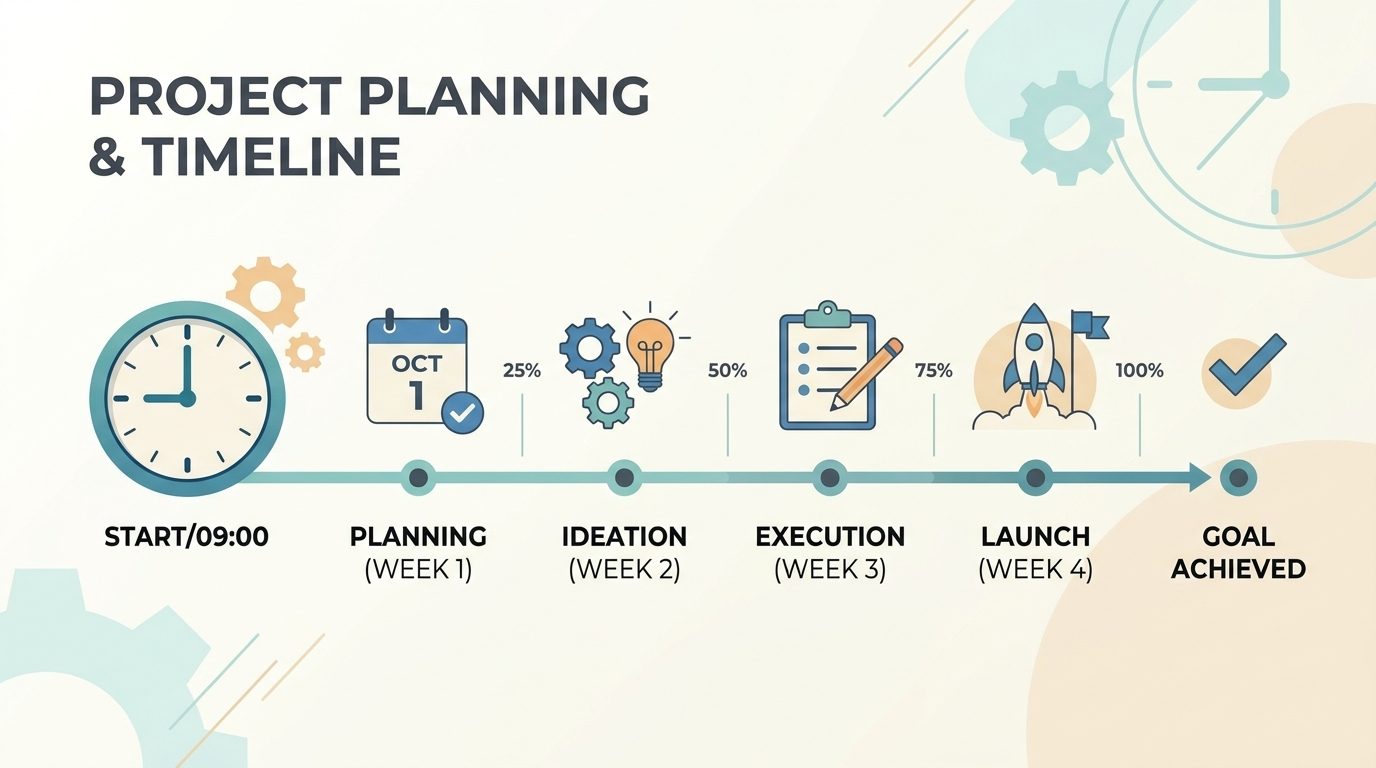
| Stage | One evening (about three hours) | One week |
| Pass one: collect questions | 15 minutes | Day 1 |
| Pass two: answer with evidence | 75 minutes | Days 2 and 3 |
| Pass three: arrange and stitch | 20 minutes | Day 4 |
| First draft | 50 minutes | Day 5 |
| Final check | 20 minutes | Days 6 and 7 |
Answering takes the biggest share of either plan, which reflects the real work of how to write an expository essay: finding out comes before explaining. In the week plan, Day 4 is also the moment to turn the sorted questions into a formal plan with the expository essay outline template.
Signs the Question Chain Has Broken
- Two paragraphs answer the same question: merge them, or split the question in two.
- A paragraph answers a question nobody asked: cut it, or find the reader question it quietly depends on.
- The reader needs an answer before it arrives: move that paragraph earlier in the chain.
- An answer contains “best” or “should”: the question behind it was an opinion question, so replace it.
- The closing raises a brand new question: save it for the body or for another essay.
Final Check Before Submitting the Essay
- Every body paragraph answers one reader question.
- The questions run in the order a newcomer would ask them.
- The thesis answers the biggest question in one sentence.
- Every answer has a source.
- No answer depends on an opinion.
- The closing looks ahead without adding new detail.
Citations for each sourced answer should match the expository essay format rules for MLA or APA before the essay goes in.
Question Chain FAQs From Students
How do I come up with questions for an expository essay?
Imagine explaining your topic to a friend who knows nothing about it, and write down every question they would ask. Start with the basics, such as what it is and where people encounter it, then move to how and why it works. Aim for about ten questions, and keep only those that facts can answer.
How many questions should an expository essay answer?
A short expository essay usually answers four to six questions, roughly one per body paragraph plus one or two in the opening. Longer papers answer more, or split a big question into smaller ones. If two questions produce nearly the same answer, merge them rather than repeating yourself.
Can I use the questions as headings in my essay?
Usually not in a short academic essay, where headings interrupt the flow. The questions guide your planning and paragraph order but stay invisible in the final draft. Longer reports and some online assignments do allow question headings, so check your instructor’s guidelines before using them.
Should I include the reader’s questions in the essay text?
Generally no, because formal expository writing avoids rhetorical questions. Turn each question into a statement instead, so “How do ships tell lighthouses apart?” becomes a topic sentence about flash patterns. The question shapes the paragraph without appearing on the page.
Is the question chain different from making an outline?
Yes, it comes before the outline. The question chain decides what the essay needs to explain and in what order, while an outline formats that decision into sections with sources and details. Many writers build the chain first, then copy the sorted questions into an outline as topic sentences.