Economics is often misunderstood as a dry tally of numbers or a collection of dusty charts. In reality, it is the study of choice under pressure. Writing about it requires a specific kind of mental gymnastics. You aren’t just reporting facts; you are building a machine out of logic and testing whether it survives the weight of reality.
Most students approach a blank page with a sense of dread. They think they need to sound like a central banker to be taken seriously. That is a mistake. Good economic writing is sharp, transparent, and slightly clinical. It prioritizes clarity over flourish. If a sentence doesn’t serve the internal logic of the argument, it is just noise.
Step 1: Deciphering the Core Problem
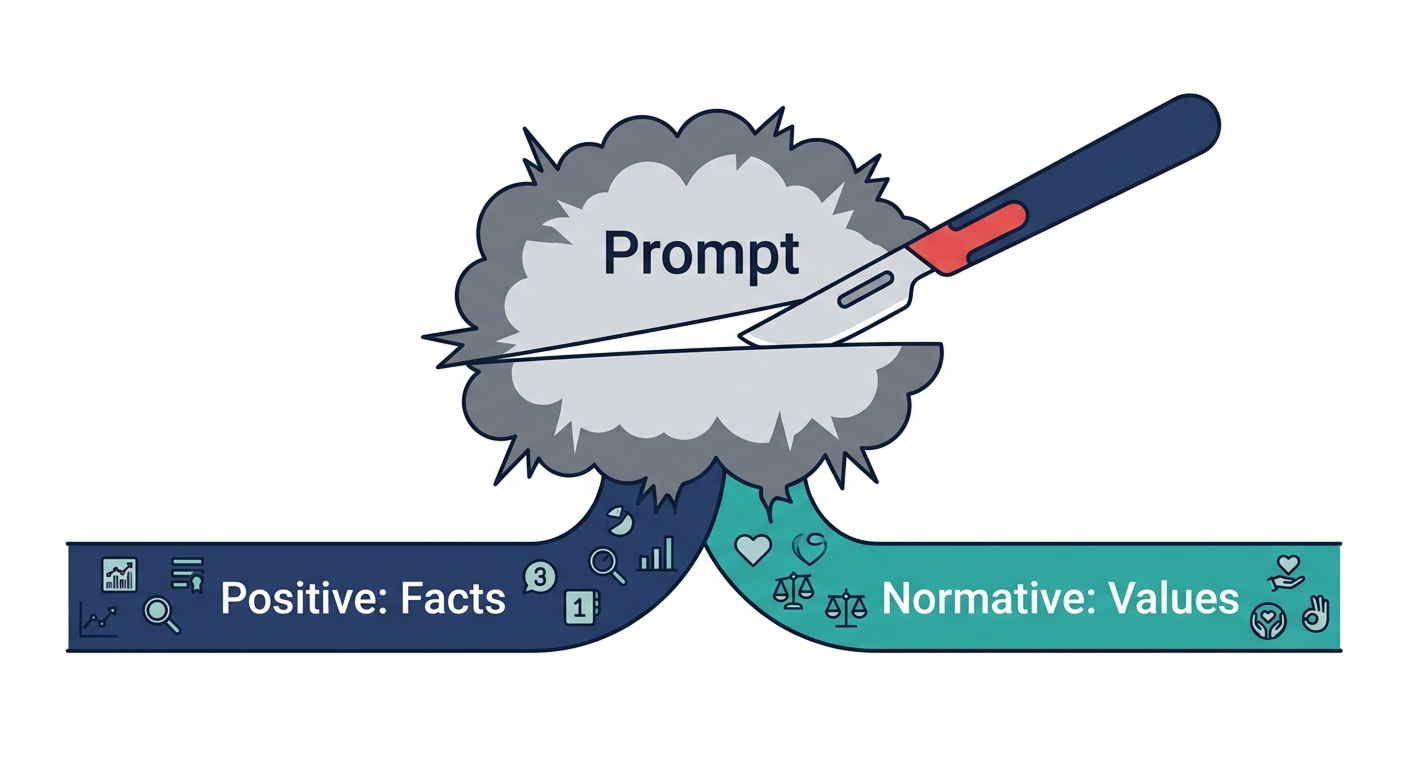
Every prompt contains a hidden trap. Before typing a single word, one must identify if the question asks for positive economics or normative economics. This distinction dictates the entire tone.
- Positive: Explaining how the world functions through facts and mechanisms.
- Normative: Arguing for how it ought to change based on values or policy.
Mixing these up leads to a muddy paper that fails to satisfy academic rigor. Start by stripping the prompt to its bones. If the topic involves the minimum wage, look for the mechanism. Is it about labor supply elasticities or purchasing power? Finding this hook allows for a more focused economics essay outline template that keeps the narrative from wandering into irrelevant territory.
Step 2: The Literature Review and Groundwork
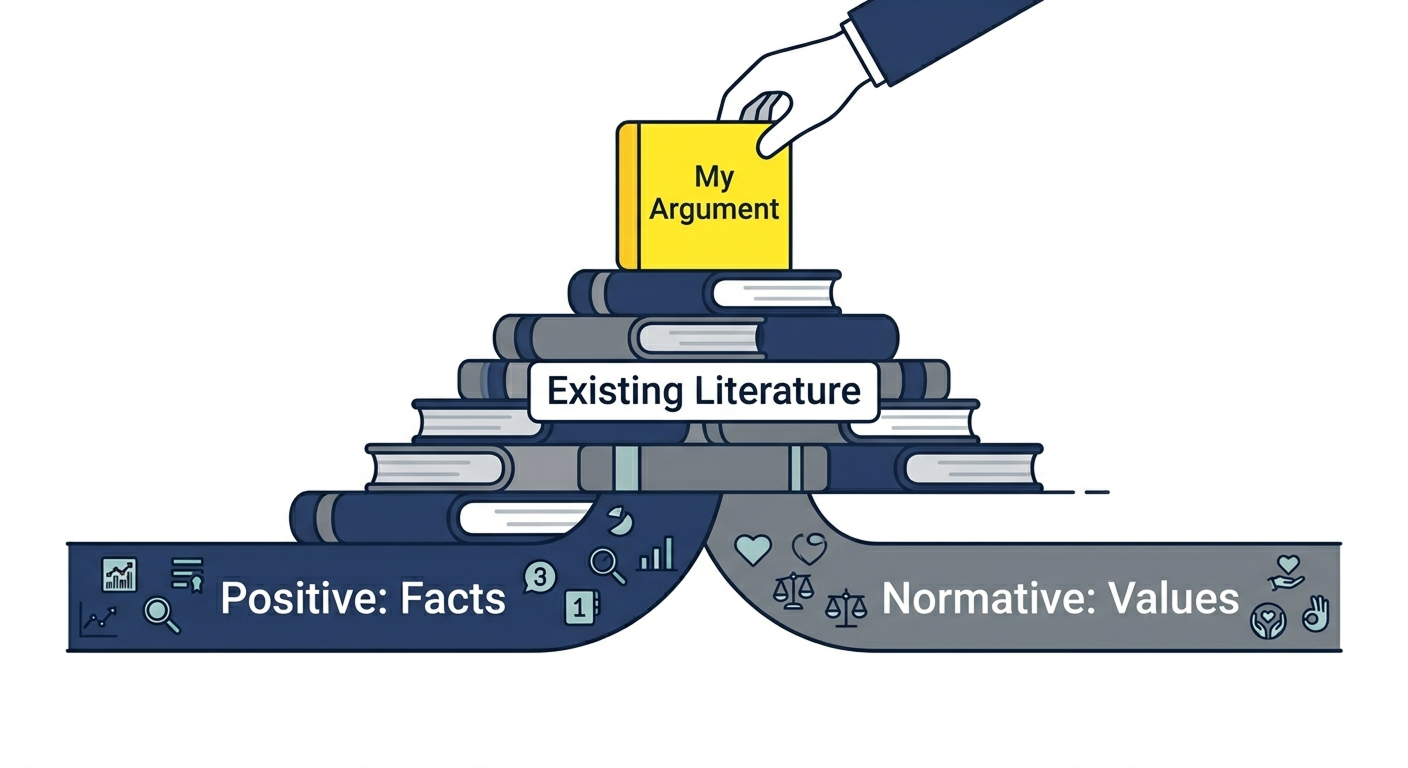
Economics does not exist in a vacuum. Every idea you have has likely been debated, debunked, or refined by someone else. A solid literature review is the foundation. It shows that the writer understands the ongoing conversation.
- Source Quality: Lean heavily on peer-reviewed journals rather than opinion pieces.
- Contextual Mapping: Identify where the consensus lies and where friction points remain.
- The “Gap”: Find a small corner of the debate that your essay will address.
Skipping this step is how writers end up building an argument on a foundation of sand. Economics moves fast, but the peer-review process ensures that the methodology behind a claim is actually sound.
Step 3: Establishing the Theoretical Framework

An essay without a theory is just an op-ed. You need a theoretical framework to act as the rules of the game for your paper. Whether you are using neoclassical assumptions or behavioral models, you must state your starting point clearly.
This includes the famous ceteris paribus assumption—holding all other variables constant to see how one specific lever moves the world. Think of the theory as a simplified map of a city. It won’t show every tree, but it tells you how to get from point A to point B. Without this lens, your data has no home.
Step 4: Hunting for Empirical Evidence
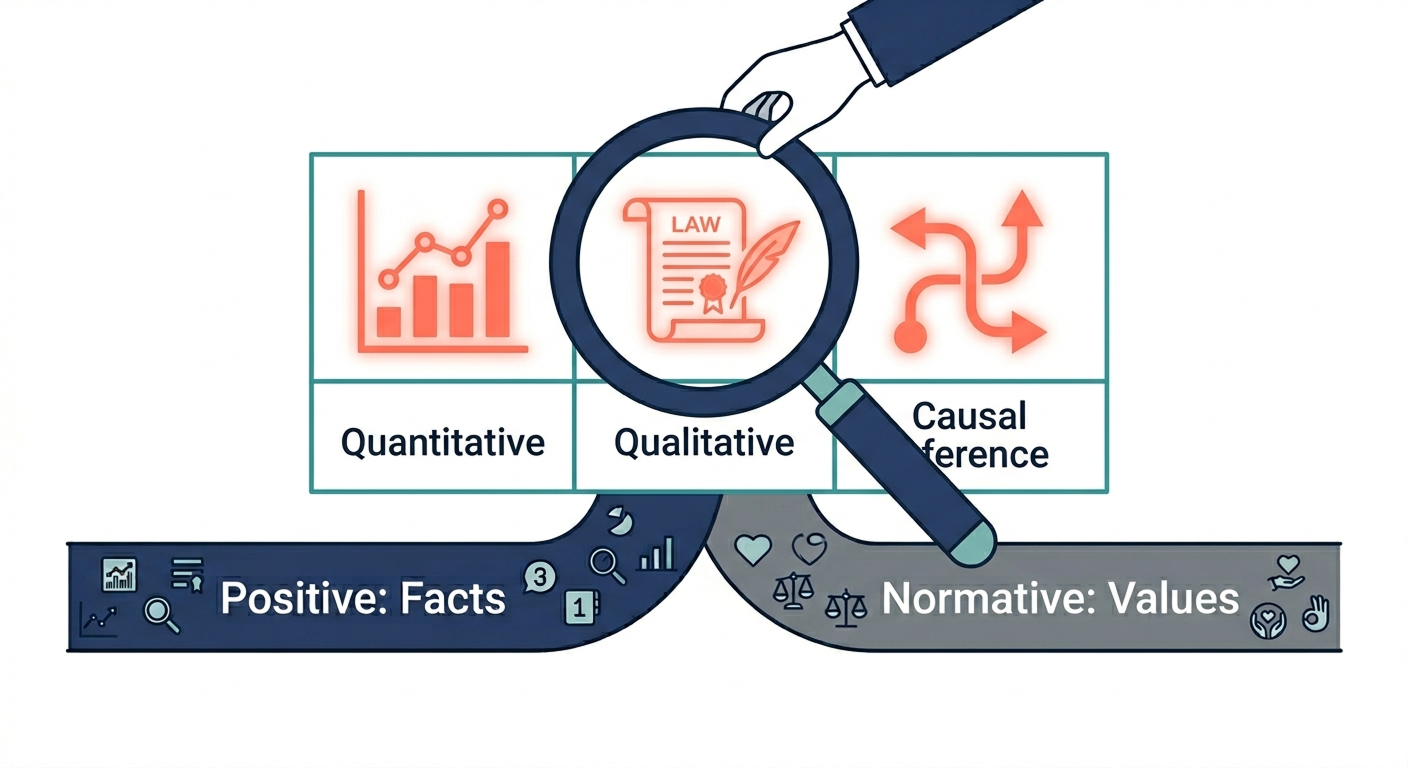
Once the theory is set, you need the cold, hard facts. Empirical evidence acts as the jury for your theoretical claims. In modern scholarship, simply quoting a textbook isn’t enough. You need to look at what actually happened in the real world.
| Analysis Type | Focus Area | Example Application |
| Quantitative analysis | Numerical trends | Tracking inflation over three decades |
| Qualitative analysis | Institutional context | Studying the impact of law changes on trade |
| Causal inference | Cause and effect | Proving a tax hike caused lower consumption |
Step 5: Master the Counter-Argument
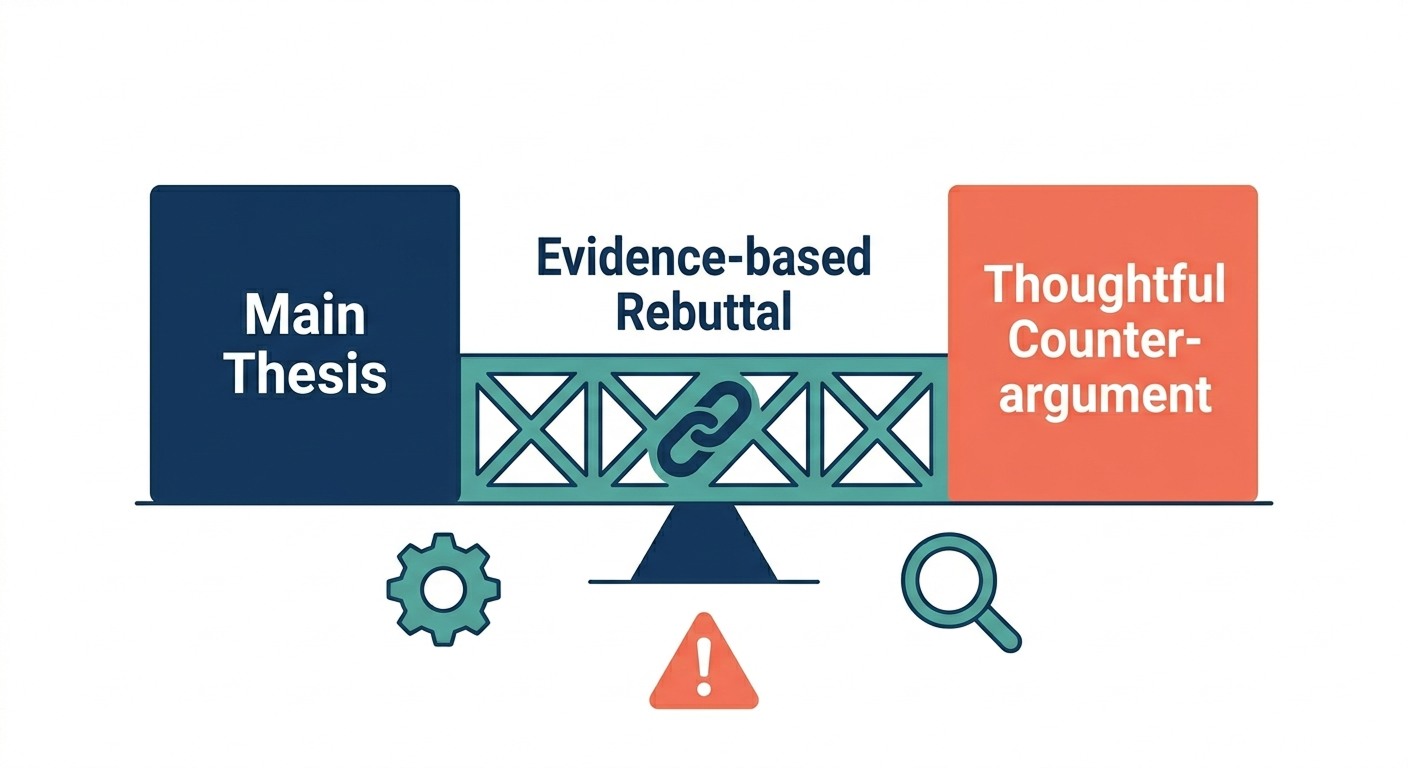
A robust counter-argument is what separates a student essay from a professional economic brief. Economics is fundamentally the science of trade-offs; there is no such thing as a “free lunch.” If your paper proposes a specific intervention, you must actively hunt for the reasons why it might fail or who it might hurt.
- Identify the Trade-off: If you argue for higher environmental standards, you must acknowledge the potential increase in operational costs for small businesses.
- Avoid “Straw Man” Arguments: Don’t just pick a weak opposing view to tear it down. Address the strongest possible objection to your thesis.
- The Rebuttal: After presenting the opposition, use empirical evidence to explain why your original thesis still holds weight or how the negative effects can be mitigated.
Acknowledging the opposition doesn’t weaken your stance; it proves you are a balanced thinker who understands the complexity of the theoretical framework you’ve chosen.
Step 6: Formatting and Citation
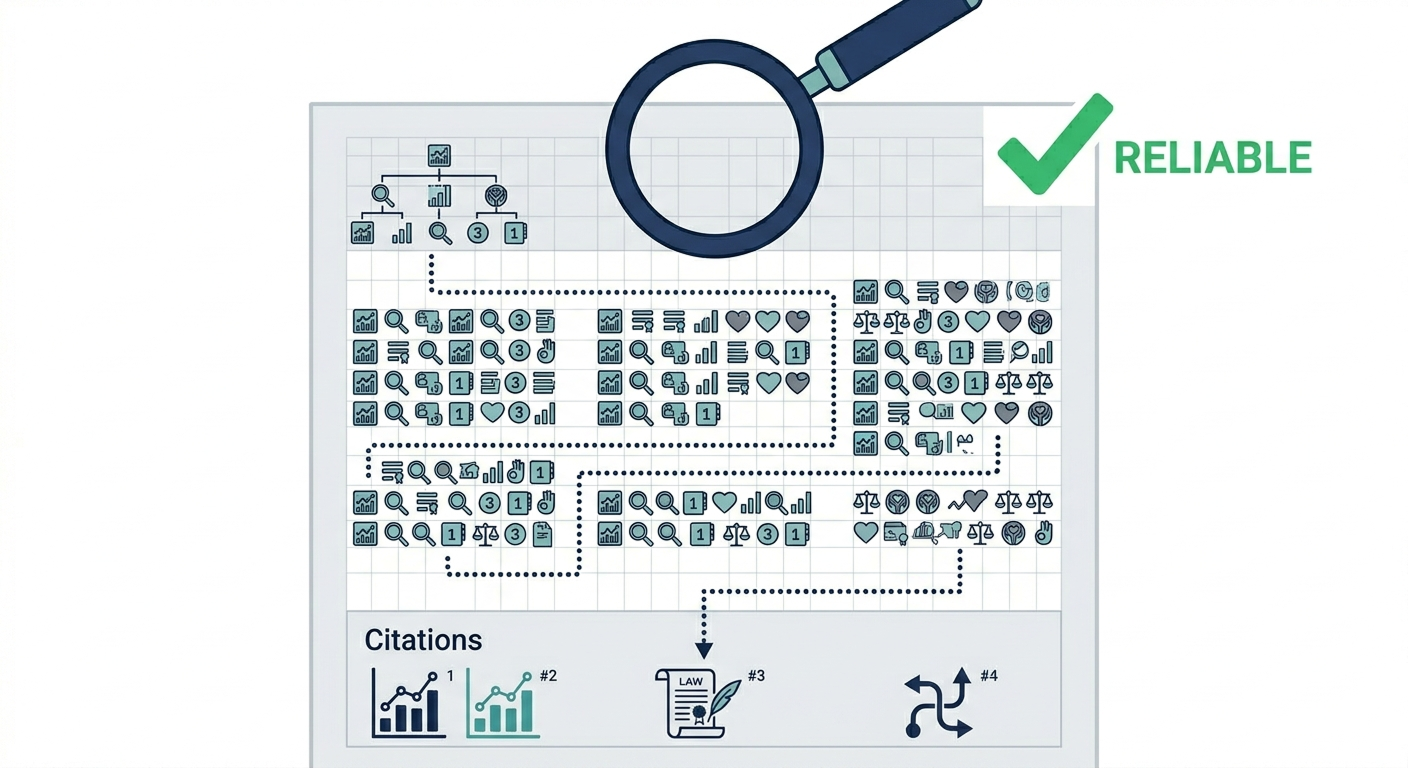
In academic economics, precision is a proxy for reliability. Neglecting economics paper format requirements suggests a lack of attention to detail that can undermine your entire quantitative analysis. Proper citation isn’t just about avoiding plagiarism; it’s about giving your reader a trail to follow.
- APA style: This is the “gold standard” for most undergraduate and graduate papers in the US. It emphasizes the date of publication, which is vital because economic data from 2024 is often more relevant than data from 1994.
- Chicago style: Often used in long-form economic history papers or when extensive footnotes are required to explain complex data sources without breaking the flow of the text.
- Data visualization: Your charts and tables should be “self-contained.” This means a reader should understand the graph without looking at the main text. Ensure every axis is labeled, units are clear (e.g., “Billions of USD”), and the source is cited directly below the image.
If the technicalities of margins and citations feel overwhelming, seeking professional economics essay help can provide a clean template to ensure your presentation matches the quality of your ideas.
Step 7: Policy Implications
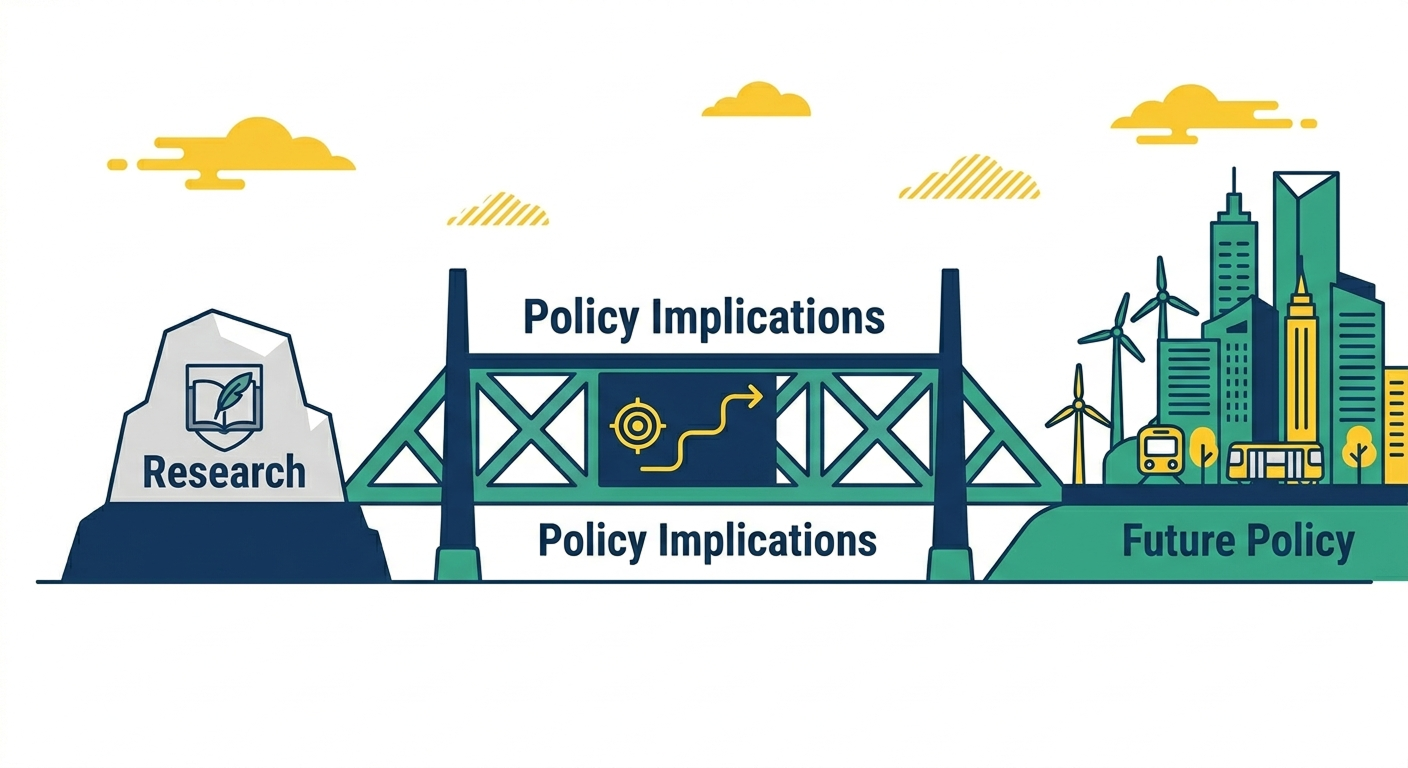
This is where the theory meets the pavement. A great essay doesn’t just end with a summary; it pivots toward the future. The policy implications section answers the question: “If your findings are correct, what should we actually do?”
- Specific vs. General: Avoid saying “the government should help.” Instead, say “the Federal Reserve should maintain the current interest rate to stabilize inflation.”
- Feasibility: Consider whether your suggestion is politically or fiscally possible. An ideal economic solution that costs 100% of GDP isn’t a useful policy.
- Unintended Consequences: Use this space to warn about potential side effects of your policy, linking back to your earlier causal inference.
This final bridge between academic exercise and real-world utility gives your essay a sense of urgency and purpose. It shows you aren’t just playing with models, but thinking about the lives affected by economic decisions.
Unusual Tips & Lifehacks for Students
- The “Zero-Logic” Test: Read your argument to someone who knows nothing about economics. If they can’t follow the chain of events (e.g., Tax up → Price up → Demand down), your logic has a gap.
- Reverse-Engineer the Conclusion: Write your final recommendation first. It’s much easier to find data that supports a clear destination than to wander around looking for a point.
- The “So What?” Margin Note: In your draft, after every paragraph, write “So what?” in the margin. If the paragraph doesn’t answer it, delete it.
- Avoid the “Everything is Important” Trap: If you try to analyze every variable, you analyze none. State your assumptions, limit your scope, and be proud of what you don’t cover.
Practical Examples of Steps in Action
| Step | How it looks in a real essay |
| Identifying the Hook | Instead of “Global Warming,” use “Carbon Taxes and their effect on European manufacturing costs.” |
| Ceteris Paribus | “Assuming consumer preferences remain stable, we can isolate the effect of the price increase.” |
| Counter-Argument | “While the tax increases revenue, it may regressively impact low-income households.” |
| Policy Implication | “Based on the 5% elasticity found, the government should subsidize electric vehicles to offset costs.” |
Learning how to structure an economics essay is only half the battle. The other half is the vibe of the writing. Economic reality is often unpredictable. Human beings don’t always act rationally. Your writing should reflect this complexity. Authentic writing acknowledges the limits of what we can know. Focus on the strength of the logic rather than the certainty of the conclusion. Keep the logic tight, the data fresh, and the voice human. That is the only way to write something worth reading.