Many economics students know more than their grades suggest. The issue is often not theory, reading effort, or intelligence. It is structure. Good ideas arrive late, statistics appear without explanation, and conclusions end just when judgment should begin.
That creates a painful mismatch. A capable student writes a weak-looking paper because the logic was never arranged properly.
Structure is not decoration. It is the system that carries analysis from the writer’s mind to the marker’s desk. When structure works, even modest prose feels sharp. When structure fails, smart thinking can look scattered.
An economics essay is judged twice: once for the quality of ideas, and once for how those ideas are organized.
What Economics Essay Structure Actually Means
Many people reduce structure to intro, body, conclusion. That is only the skeleton. Real structure is the order in which reasoning appears.
It controls:
- When the thesis becomes visible?
- When evidence appears?
- When opposing views are acknowledged?
- When limits are discussed?
- When final judgment is delivered?
If these moments appear in the wrong order, the essay feels weaker than it truly is.
This economics essay structure should always help the reader answer four silent questions:
- What is the argument?
- Why should it be believed?
- What weakens it?
- What conclusion follows?
The Standard Economics Essay Format That Still Works
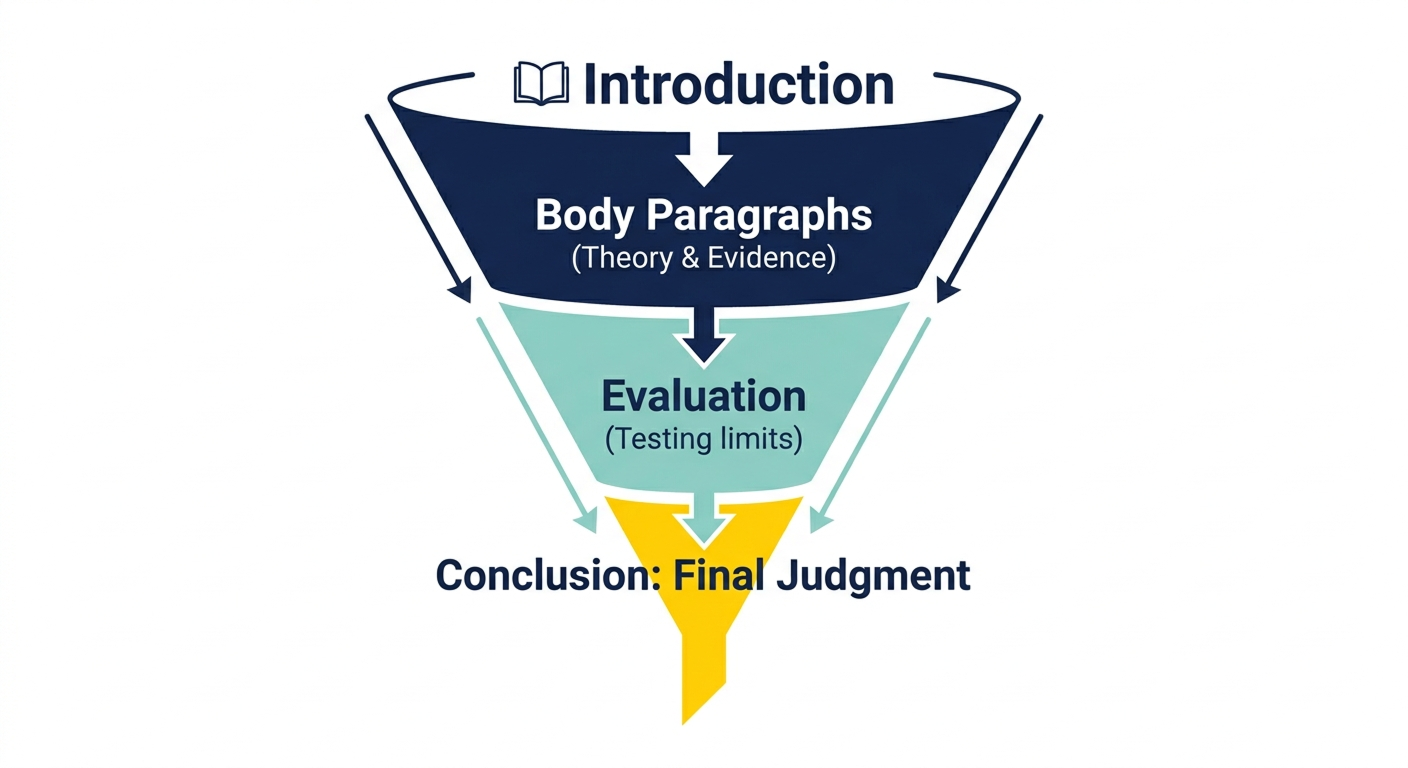
There is no need to reinvent academic writing every week. The standard economics essay format remains useful because it mirrors logical decision-making.
| Section | Main Purpose | Hidden Goal |
| Introduction | State question and thesis | Create direction |
| Body Paragraphs | Develop arguments with evidence | Build trust |
| Evaluation | Test limits and counterpoints | Show maturity |
| Conclusion | Deliver final judgment | Sound decisive |
Simple frameworks often outperform creative chaos.
Where Most Economics Essays Break Down
The majority of weak drafts fail in predictable places. Knowing them early saves marks later.
Common Structural Errors
- Introduction with no thesis.
- Three body paragraphs repeating the same point.
- Statistics inserted with no explanation.
- No counterargument response paragraph.
- Conclusion that only summarizes.
- Paragraphs with no logical transitions.
- Examples unrelated to the thesis.
These errors make prepared students look rushed.
How to Start When You Feel Completely Lost
Many students open the document and try to write sentence one immediately. That is usually the wrong move. Start with decisions first.
Write These Four Notes Before Drafting
- my answer in one sentence;
- the strongest reason supporting it;
- the best evidence available;
- the main weakness or objection.
Once these four notes are clear, most drafting anxiety drops fast.
Students searching economics paper topics for college often struggle because they choose broad subjects before deciding what argument they could actually defend.
How to Build a Strong Introduction
The introduction should not wander through history unless history directly matters. Its job is orientation.
Reliable Introduction Formula
- Name the issue.
- Show why it matters.
- State your position.
- Preview the logic briefly.
Weak Opening
Inflation is an important topic in economics today.
Stronger Opening
Recent inflation reduced household purchasing power, yet aggressive rate hikes carry growth risks. This essay argues that mixed policy responses are more sustainable than monetary tightening alone.
That version gives conflict, relevance, and direction immediately.
Economics Thesis Statement Placement
Many writers hide the thesis too deep in the paper. Readers should not need detective skills.
Economics thesis statement placement usually works best in the final sentence of the introduction or just before it ends.
Why This Position Works
- The reader knows what to expect.
- Body paragraphs feel connected.
- The conclusion can return to the claim cleanly.
- Markers trust the writer sooner.
A clear sample thesis for economics paper assignments often scores better than three vague setup paragraphs.
The Best Body Paragraph Formula
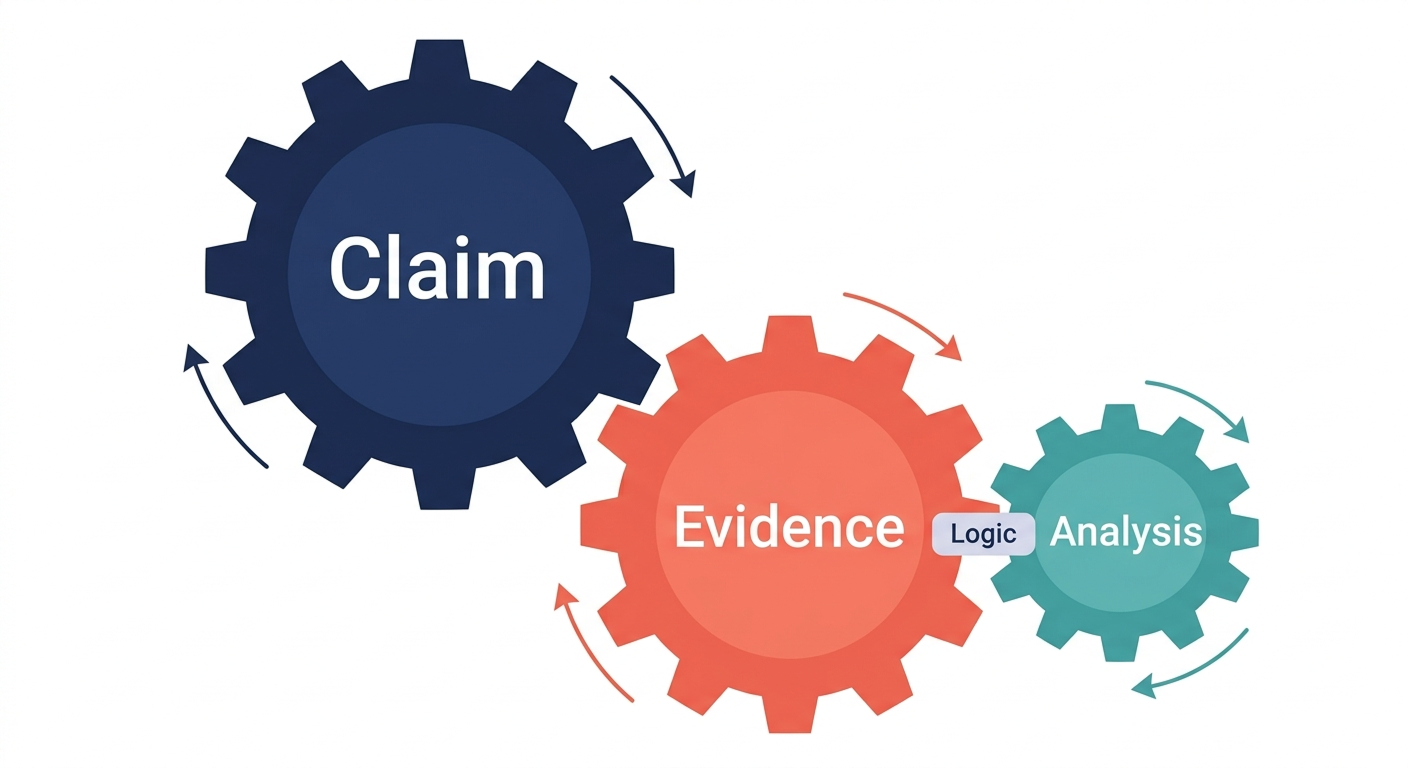
Most students need fewer tricks and better mechanics. Use the Claim-evidence-analysis sequence.
| Part | What It Does |
| Claim | Introduces the point |
| Evidence | Supports the point |
| Analysis | Explains why evidence matters |
Mini Example
Higher mortgage rates reduced housing demand. Loan approvals fell as borrowing costs increased. This suggests monetary policy can cool asset markets faster than it changes wage behavior.
The third sentence is where marks are often won.
Theory Application Section: Where Essays Improve Fast
Teachers usually know the theory already. Repeating textbook lines adds little value. Applying theory to a real case creates value.
Weak Use of Theory
Supply and demand determines price.
Better Use of Theory
When rental demand rose faster than housing construction, prices increased because supply was slow to respond in the short run.
This Theory application section often separates average drafts from strong ones.
How Many Body Paragraphs Should You Use?
There is no sacred number. Use the amount needed to defend the thesis properly.
- 2 paragraphs for short timed essays;
- 3 paragraphs for standard assignments;
- 4 paragraphs for comparative analysis structure tasks;
- 5 only when each paragraph has a clear job.
More paragraphs do not automatically mean more depth.
Use One Paragraph for Evaluation
This is one of the easiest upgrades in economics writing. Many students argue one side only, then wonder why the paper feels basic.
Create one paragraph that challenges your own case.
What Evaluation Can Include
- different effects in different countries;
- short-run vs long-run sectioning;
- weakness in the data;
- behavior changing over time;
- political limits to ideal policy;
- alternative explanations.
This single move often separates average work from stronger work.
How to Use Data Without Looking Mechanical
Students often throw numbers into paragraphs and hope authority appears. It rarely does.
Use one number, then interpret it.
Data Interpretation Paragraph Example
Food prices rose 11% while wages rose 5% in the same period. This means real purchasing power declined, especially for households spending a larger share on essentials.
Data becomes meaningful only after explanation.
Graph Commentary Structure Most Students Miss
If a graph is provided, many writers simply describe movement. Better writers explain significance.
Use This Graph Commentary Structure
- What changed?
- When did it change?
- Why might it have changed?
- What does it imply?
A graph is evidence, not decoration.
Case Study Integration Method
Examples become stronger when inserted precisely instead of dropped in randomly.
Weak Version
Argentina has had inflation problems.
Better Version
Argentina illustrates how repeated credibility shocks can weaken anti-inflation policy, since households begin expecting future price rises regardless of official promises.
This Case study integration method makes examples analytical.
Cause-and-Effect Logic Flow
Economics rewards chain thinking. Show steps, not slogans.
Higher fuel costs raised transport costs, which increased retail prices, which reduced household discretionary spending.
This Cause-and-effect logic flow feels stronger because transmission is visible.
Policy Evaluation Framework
When judging any policy, use more than one standard.
- efficiency;
- equity;
- cost;
- political feasibility;
- long-term sustainability.
This Policy evaluation framework instantly deepens analysis.
Market Mechanism Explanation Block
Whenever prices, wages, demand, or jobs move, explain the mechanism.
Do not write “prices rose.” Write why prices rose.
Do not write “employment fell.” Explain through what channel it fell.
This Market mechanism explanation block creates substance where weak essays stay shallow.
Assumption Testing Paragraph
Excellent essays test the hidden assumption inside an argument.
A carbon tax assumes consumers can switch behavior. If public transport is weak, the response may be smaller than theory predicts.
This Assumption testing paragraph feels advanced because it questions conditions rather than repeating claims.
Limitation Discussion Section
Students often fear mentioning weaknesses. Strange fear. Limits usually increase credibility.
- data may be incomplete;
- policy effects vary by region;
- short sample periods distort trends;
- behavior may change later.
The Limitation discussion section shows intellectual honesty.
Paragraph Transition Strategy
Transitions should carry logic, not filler words.
- While rates reduced demand, supply pressure remained.
- Although wages rose, real income still fell.
- Even if tariffs protect jobs, consumers pay more.
This Paragraph transition strategy keeps momentum alive.
Evidence Weighting Structure
Not all evidence deserves equal trust.
- Official statistics.
- Peer-reviewed studies.
- Major institutional reports.
- Credible journalism.
- Anecdotes last.
This Evidence weighting structure prevents weak support from dominating the essay.
How to Write a Conclusion That Scores
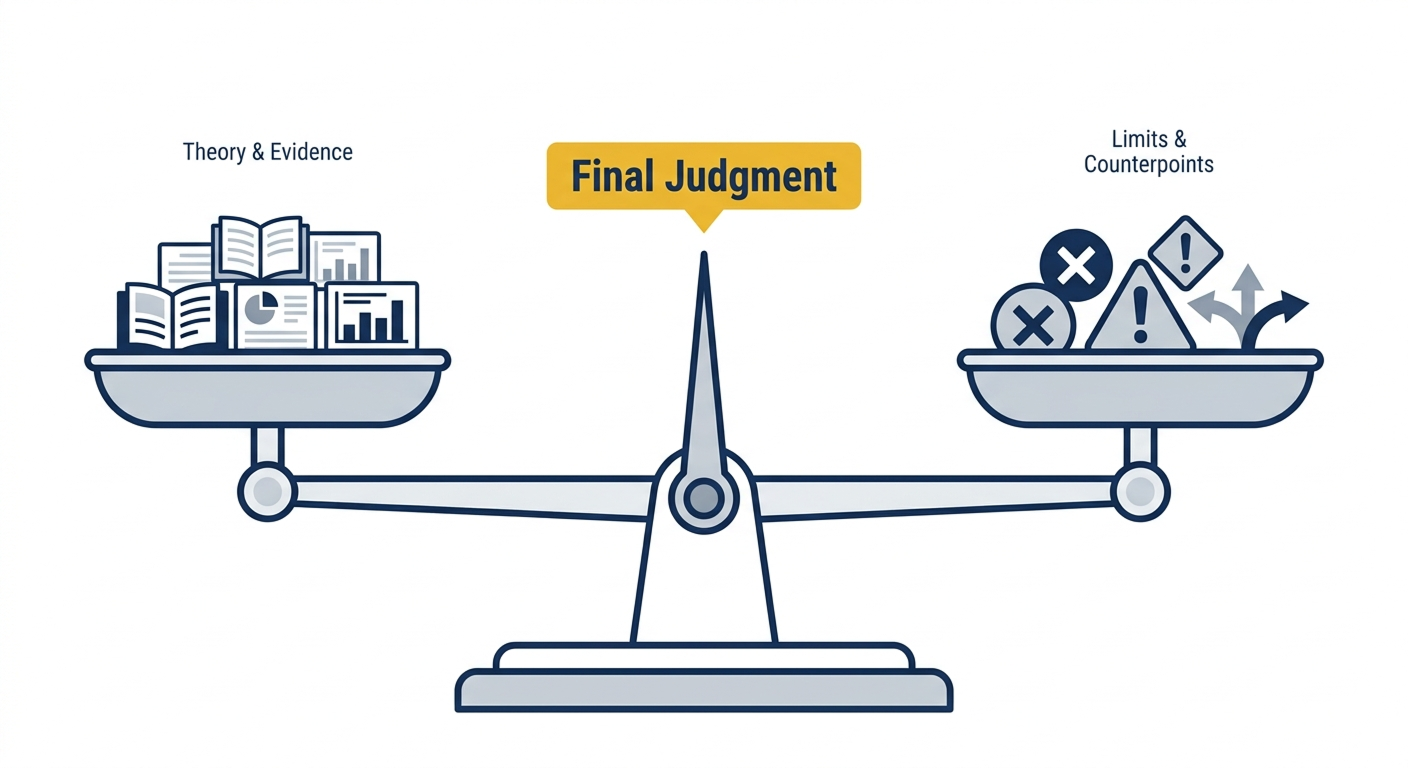
Many conclusions repeat earlier paragraphs. Better conclusions decide.
Conclusion Judgment Model
- Return to the question.
- State strongest conclusion.
- Acknowledge one limit.
- End clearly.
Rate hikes can reduce inflation, but when supply shocks dominate, mixed policy responses are more durable than monetary tightening alone.
The 60-Second Structural Audit Before Submission
Before handing it in, run this quick test.
- Can the thesis be found in 30 seconds?
- Does every paragraph support it?
- Is one paragraph evaluative?
- Is evidence explained?
- Does the conclusion judge rather than summarize?
Some stressed students browse economics essay writing services at this stage. Often they need one calm revision hour instead.
They feel controlled. Claims arrive early. Evidence matters. Limits are admitted. The conclusion sounds earned.
Great structure is mostly invisible. The reader simply feels that the argument makes sense from start to finish.