Many students expect economics essays to feel dry before they even begin. Numbers, charts, formulas, abstract theories. Yet the subject becomes far more interesting once it is tied to rent prices, wages, taxes, trade shocks, and the strange ways people react to incentives.
A strong topic changes everything. It gives the essay direction, tension, and relevance. A weak topic often traps the writer in summary mode, where pages pass but nothing is argued.
The best economics papers usually ask why smart people disagree, who benefits, who pays, and what trade-off gets ignored.
How to Choose a Strong Economics Essay Topic
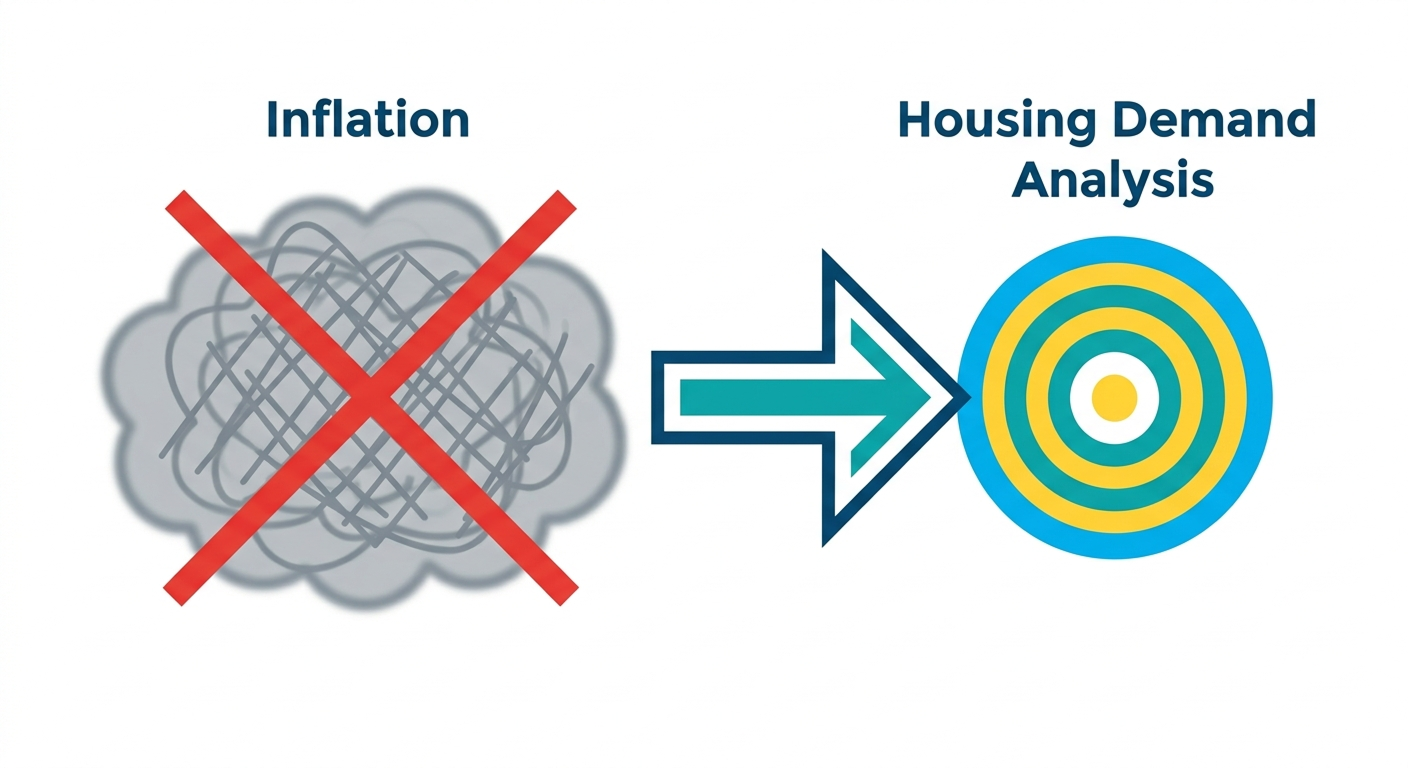
Good topics are narrow enough to analyze and broad enough to matter. “Inflation” is too wide. “How interest rate hikes changed housing demand in major cities” already gives the writer something to test.
What Strong Topics Usually Have
- a clear economic mechanism;
- real-world relevance;
- evidence or case studies;
- room for competing views;
- specific time period or market.
What Weak Topics Usually Lack
- defined scope;
- any measurable evidence;
- conflict between viewpoints;
- current relevance;
- a workable thesis.
Some students look for an economics essay writer before choosing a topic. Usually the smarter move is selecting a sharper question first.
Macroeconomics Essay Topics
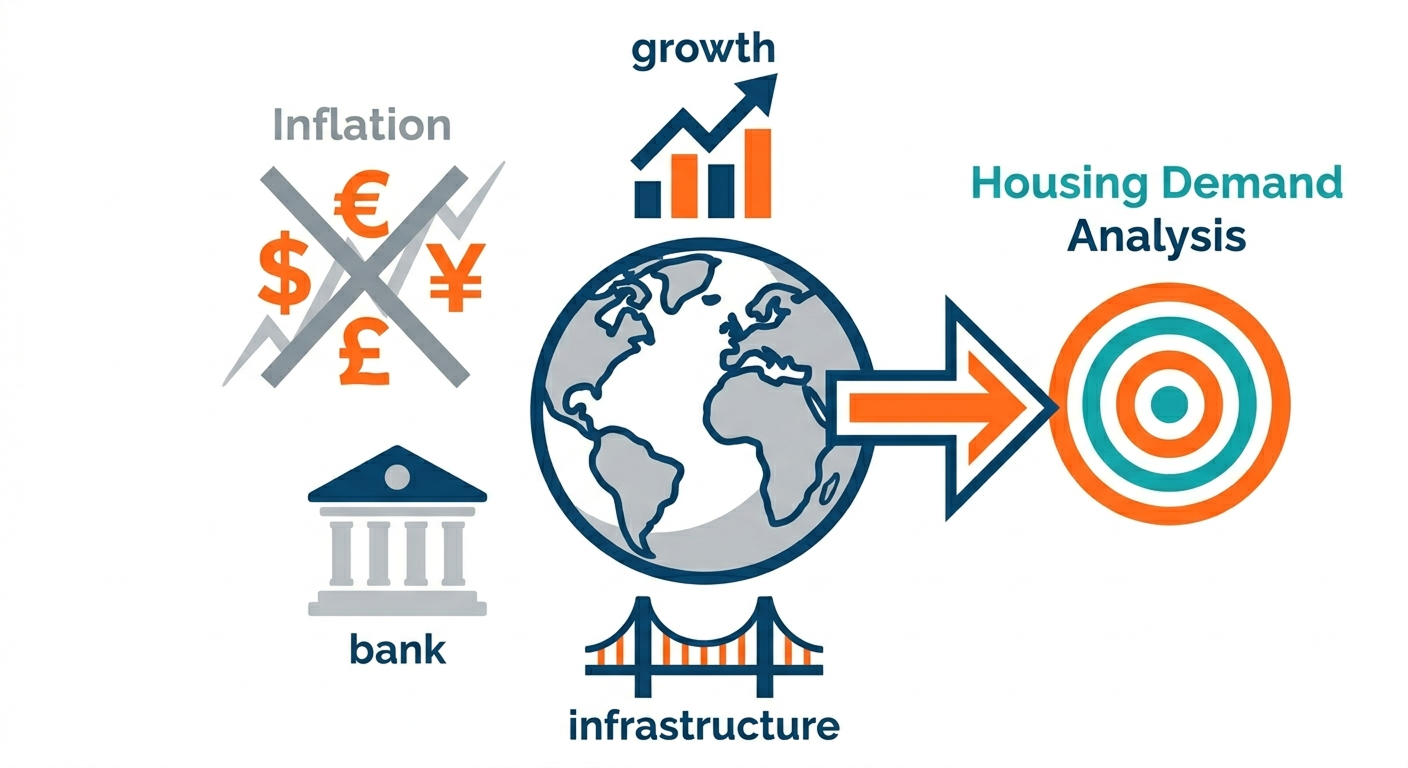
Macroeconomics studies whole economies: growth, inflation, unemployment, debt, recessions, and government responses. These topics work well for students who enjoy policy debates and large-scale trends.
Macroeconomic Policy Debates
- Should governments prioritize inflation control over growth?
- How effective are stimulus packages during downturns?
- Do tax cuts reliably increase demand?
- Can central banks engineer soft landings?
- Should balanced budgets matter during recessions?
- Do price controls ever work in crisis periods?
- How expectations shape inflation behavior
- Can productivity growth solve long-term stagnation?
- Should governments subsidize strategic industries?
- When does intervention become distortion?
Inflation and Wage Dynamics
Inflation becomes more interesting when wages fail to keep pace or when some sectors gain faster than others.
- Why wages often lag inflation
- Can wage growth create inflation spirals?
- How inflation affects low-income households most
- Do unions protect real wages?
- Why firms raise prices faster than costs
- Wage transparency and salary pressure
- Remote work and wage competition
- Benefits replacing pay increases
- How inflation changes consumer habits
- Automation and wage suppression
Central Bank Interest Rates
- How rate hikes affect borrowing demand
- Should central banks move fast or slowly?
- Interest rates and startup funding
- Do rate cuts create asset bubbles?
- Forward guidance and market psychology
- Rate policy and currency strength
- How rates affect savings behavior
- Do young households carry more pain?
- How rates influence business investment
- Should inflation targets change?
Recession Risk Analysis
- Are inverted yield curves still useful?
- How consumer confidence predicts downturns
- Why some recessions recover faster
- How layoffs spread through local economies
- Can AI soften future recessions?
- Do governments react too late?
- Household debt as warning signal
- Which sectors fall first?
- Supply shocks and recession risk
- Why labor markets lag the cycle
Public Debt Sustainability
- When does public debt become dangerous?
- Can growth outpace debt burdens?
- Debt versus austerity trade-offs
- How aging populations affect debt paths
- Should borrowing fund infrastructure only?
- Election politics and debt spending
- Why reserve-currency nations differ
- Pension liabilities and hidden debt
- Do markets punish debt equally?
- Can debt fears be overstated?
Microeconomics Essay Topics
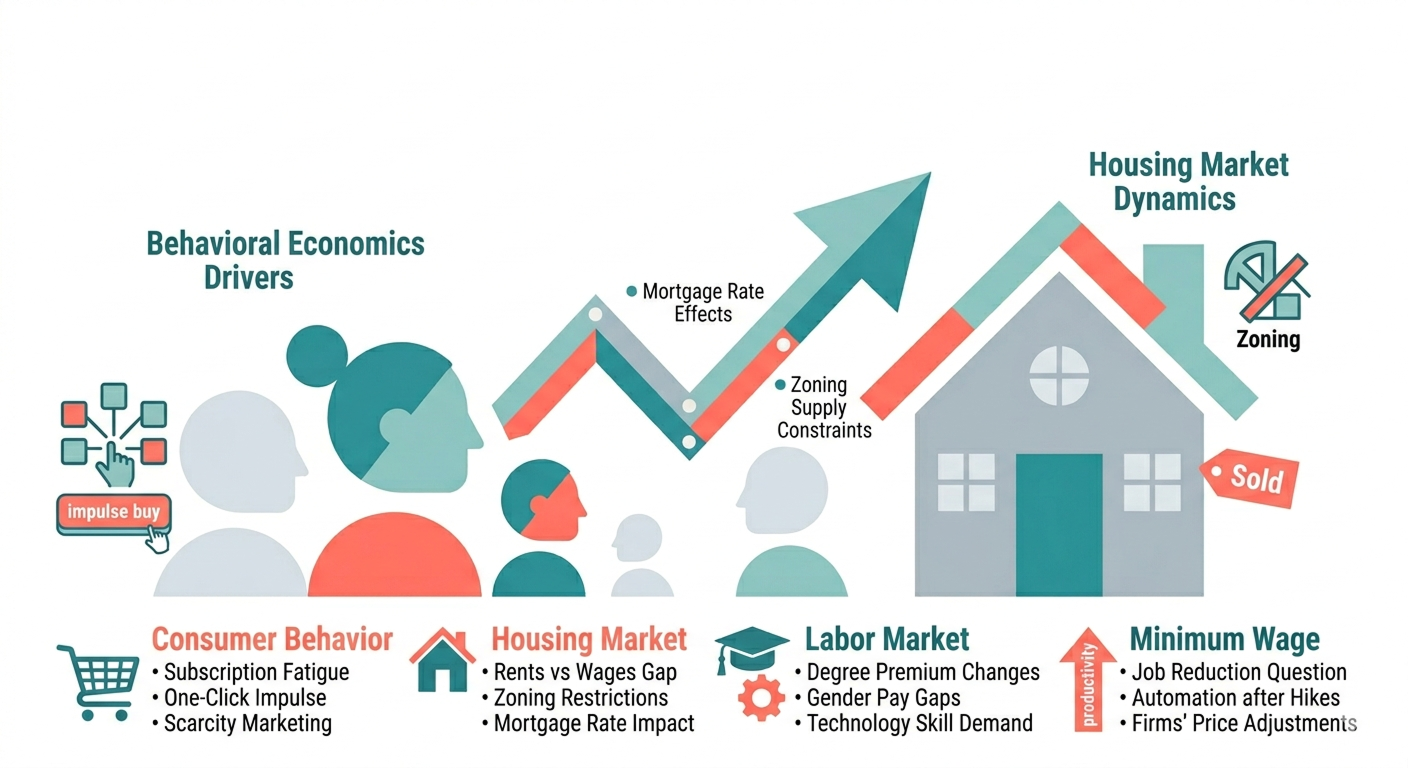
Microeconomics focuses on individuals, firms, prices, incentives, and market behavior. These topics often produce sharper case-based essays.
Consumer Behavior Economics
- Why consumers overpay for convenience
- Subscription fatigue and cancellation behavior
- How default options shape spending
- Impulse buying in one-click systems
- Why reviews distort demand
- Scarcity marketing and urgency
- Brand loyalty versus price sensitivity
- Loyalty apps and repeat spending
- Free shipping thresholds and psychology
- Why people ignore future costs
Behavioral Economics Essay Topics
- Loss aversion in investing
- Anchoring in salary negotiations
- Present bias and savings failure
- Nudges versus mandates
- Choice overload in digital markets
- Why free trials convert users
- Status quo bias in subscriptions
- Social proof and spending
- Overconfidence in entrepreneurship
- Fear of small risks
Housing Market Economics
- Why rents rise faster than wages
- Zoning restrictions and supply
- Do investors distort prices?
- Mortgage rates and first-time buyers
- Should rent control expand?
- Short-term rentals and housing supply
- Construction costs and affordability
- Vacancy taxes in cities
- Remote work and suburban demand
- Why housing markets stay sticky
Labor Market Inequality
- Why degree premiums changed
- Gender pay gaps by sector
- Do internships widen inequality?
- How networks shape hiring
- Union decline and wage gaps
- Technology and middle-skill jobs
- Regional wage divergence
- Credential inflation in hiring
- Layoffs and long-term earnings
- Why some skills gain value suddenly
Minimum Wage Effects
- Does higher minimum wage reduce jobs?
- How firms adjust through prices
- Minimum wage and staff turnover
- Regional policy differences
- Automation after wage hikes
- Living wage versus legal minimum
- Effects on youth employment
- Small business adjustment strategies
- Does higher pay improve productivity?
- City-level evidence on reform
Gig Economy Incentives
- Are gig workers truly independent?
- Platform pricing and worker income
- Algorithmic management and motivation
- Why surge pricing changes supply
- Gig work as recession buffer
- Benefits without employee status
- Ratings systems and worker behavior
- Multi-platform labor strategies
- How flexibility is priced
- Long-term career effects of gig work
Policy, Trade, and Emerging Economics Topics

Modern economics increasingly overlaps with climate policy, trade disputes, technology shocks, healthcare systems, and regulation. These topics feel current because they are current.
Climate Change Economics
- Cost of delayed climate action
- Insurance markets and climate risk
- Heat waves and productivity losses
- Climate migration and labor markets
- Energy transition job creation
- Water scarcity and pricing systems
- Climate risk in housing values
- Economic cost of biodiversity loss
- Disaster recovery spending
- Local economies after extreme weather
Carbon Tax Policy Topics
- Are carbon taxes politically viable?
- How rebates protect households
- Carbon border adjustments and trade
- Tax versus emissions caps
- Do taxes change behavior fast enough?
- Industry exemptions and fairness
- Revenue use after carbon taxes
- Public opinion on carbon pricing
- Can taxes reduce innovation?
- Why some countries reversed them
Global Trade Tensions
- Tariffs and consumer prices
- Trade wars and domestic politics
- Friend-shoring versus free trade
- Export controls on strategic goods
- How sanctions reshape trade routes
- Currency policy and exports
- Food trade vulnerability
- Can protectionism revive industry?
- Why globalization slowed
- Trade blocs and bargaining power
Supply Chain Economics
- Why just-in-time systems became fragile
- Dual sourcing versus efficiency
- Shipping costs and inflation
- Inventory buffers after shortages
- Reshoring economics by industry
- Port congestion and prices
- Supplier concentration risk
- How data improves logistics
- Geopolitical shocks and sourcing
- Can resilience stay profitable?
Cryptocurrency Market Regulation
- Should crypto be treated as securities?
- Stablecoin risk to finance systems
- Consumer protection in digital assets
- Why bubbles form quickly
- Crypto taxation challenges
- Regulation and innovation balance
- Cross-border enforcement issues
- Do crypto markets widen access?
- Fraud economics in token markets
- CBDCs versus crypto assets
AI Productivity Economics
- Will AI raise wages or polarize them?
- How AI changes office productivity
- Can small firms benefit equally?
- AI and output measurement
- Does AI reduce entry barriers?
- Job redesign after automation
- Who captures AI gains first?
- Why adoption differs by sector
- AI and management efficiency
- Could AI slow hiring growth?
Healthcare Cost Economics
- Why healthcare prices vary widely
- Insurance incentives and overuse
- Drug pricing policy debates
- Preventive care versus treatment spending
- Administrative costs in health systems
- Public option economics
- Aging populations and health budgets
- Telehealth cost efficiency
- Hospital consolidation and pricing power
- Value-based care incentives
Development Economics Case Studies
- Microfinance success and limits
- Cash transfers versus subsidies
- Education spending and growth
- Infrastructure as growth catalyst
- Corruption and investment outcomes
- Urbanization and productivity gains
- Mobile banking in emerging markets
- Foreign aid effectiveness debates
- Agricultural productivity reforms
- Institution quality and prosperity
How to Turn a Topic Into a Strong Essay
A sharp topic still needs structure. Strong papers usually follow claim, evidence, counterargument, and conclusion. Readers should know the thesis early.
| Essay Part | Purpose |
| Introduction | Present question and thesis |
| Body | Use data and competing views |
| Analysis | Explain incentives and trade-offs |
| Conclusion | Return to the main claim |
This economics essay structure works because it balances theory with argument.
Students asking how to write an economics essay often focus too much on definitions. Interpretation usually matters more.
Quick Example of Topic Improvement
Weak topic: inflation.
Stronger topic: How central bank rate hikes changed rental demand and household borrowing during the latest inflation cycle.
That sharper version creates direction immediately. It could become an economics essay example with real analytical depth.
Usually not jargon. Usually not formulas alone. It is the moment a writer explains why smart people disagree and what each side is willing to sacrifice.
Economics becomes vivid when numbers meet human behavior. That is where the strongest essays begin.