A narrative essay outline is a scene by scene plan that fixes where the story opens, which moments build tension, where the turning point falls and what image or realization closes it. The template below lays out those slots with placeholders, followed by a completed sample and a method for turning the plan into a draft.
The Blank Narrative Outline Template
Each slot in this narrative essay outline stands for one planning decision, so an empty bracket shows exactly what is still undecided. The template works best copied into a blank document, with every bracket replaced.
- Opening scene
- Place and time: [where and when the story starts]
- First image: [one concrete object or action]
- Expectation: [what the writer believed or wanted going in]
- Rising scenes (two or three)
- Scene A: [what happens]
- Plant: [a detail that will matter later]
- Scene B: [what happens]
- Pressure: [what makes the situation harder]
- Turning point
- The moment: [the exact line, action or silence where the expectation breaks]
- Slow down here: [three or four details to include]
- Afterward
- What happens next: [one or two actions]
- Payoff: [where the planted detail returns with new meaning]
- Closing lines
- Final image: [the first image, seen differently]
- Meaning: [one sentence, stated or implied]
Students who want to test a filled plan against a finished model can ask a teacher, visit a writing center or compare it with work from an Essay service. The template still does its best work filled with the writer’s own memory.
Four Ways to Outline a Narrative Essay
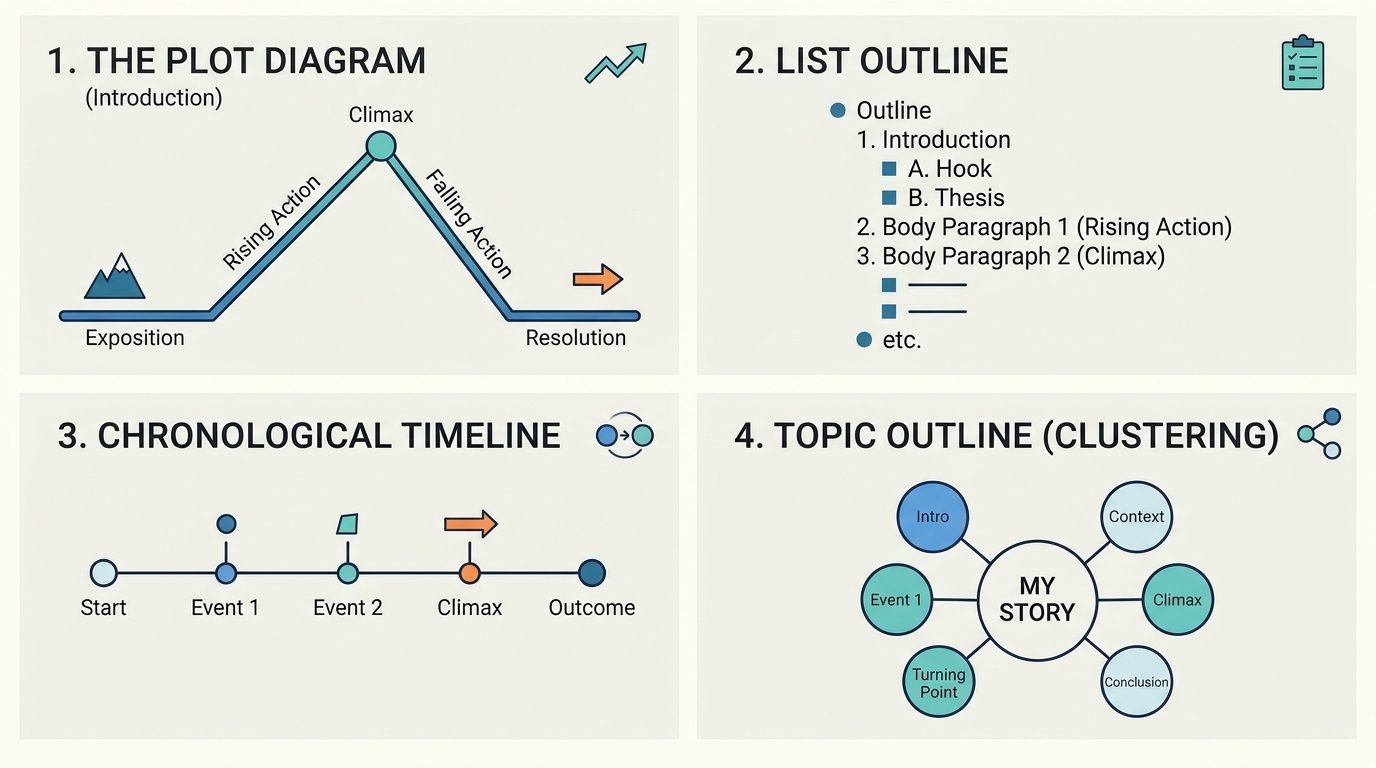
The template above is one option. The right method depends on how settled the story already is.
| Method | What it looks like | Best for | Watch out for |
| Topic outline | A short phrase per scene | Writers who already know the story well | Too thin to show where tension builds |
| Sentence outline | One full sentence per paragraph | Assignments that require a submitted outline | Can lock in wording too early |
| Scene card outline | One movable card per scene | Stories whose order is not settled yet | Easy to forget the ending |
| Reverse outline | One line per paragraph of an existing draft | Fixing a draft that feels flat or baggy | Needs a draft to exist first |
The reverse outline gets used far less than it deserves. Listing what each paragraph of a draft actually does, in five words or fewer, instantly shows paragraphs that repeat each other or stall the story.
An outline decides the order of events. What each part is supposed to accomplish is a separate question, answered in the narrative essay structure guide, and the two work best side by side.
Building the Outline in Five Moves
Move 1: Decide the Final Image Before Anything Else
An outline plans a route, and a route needs a destination. The last line of the story, whether an image or a short realization, tells the writer which earlier scenes earn their place. That closing idea is also the raw material for the narrative essay thesis, which can appear early or stay unspoken.
Move 2: Open at the Scene Closest to Tension
The opening slot goes to the first moment where something is at stake. Background that genuinely matters shrinks to a sentence inside that first scene instead of taking a paragraph of its own.
Move 3: Give Each Middle Scene a Job
Every rising scene should do at least one of these:
- raise the stakes;
- introduce the person the turn depends on;
- plant a detail that pays off later;
- show an attempt that fails.
A scene with none of these jobs can be cut before a single word is drafted.
Move 4: Pair Every Plant With a Payoff
Narrative outlines need a check that argumentative plans rarely do. Any object, phrase or habit introduced early should return later with new meaning. The outline is the cheapest place to confirm that each plant has a payoff and each payoff has a plant.
Move 5: Tell the Outline Aloud in Sixty Seconds
Reading the outline out loud as a story, in about a minute, exposes gaps fast. Wherever the retelling needs an “and then somehow,” the outline is missing a scene or a cause.
A Completed Outline: Translating at the Car Dealership
The sample fills the template with a family memory: a teenager translating for a father during a car purchase. Students still looking for a moment of their own can browse narrative essay topics by theme and try the template on two candidates before choosing.
- Opening scene
- Place and time: a used car dealership on a rainy Saturday
- First image: the writer holding a folder of paperwork like a shield
- Expectation: the father cannot manage this without a translator
- Rising scenes
- Scene A: the salesman speaks only to the writer, never to the father
- Plant: the father tapping a pen against the price sheet
- Scene B: the writer translates the financing terms, softening what sounds rude
- Pressure: a new fee appears that the writer does not understand
- Turning point
- The moment: the father rests the pen on one line and says, in careful English, “This number is wrong.”
- Slow down here: the salesman’s pause, the recalculated total, the father’s calm face, the heat in the writer’s cheeks
- Afterward
- What happens next: the father signs, then hands the folder back for the writer to carry
- Payoff: the pen tapping returns in the car, this time in rhythm with the radio
- Closing lines
- Final image: the folder on the writer’s lap, carried now out of respect rather than duty
- Meaning: speaking a language and understanding a situation are two different things
Every line fits on one page, yet the draft keeps full freedom over wording, dialogue and pacing. That balance is the goal of any outline.
Stretching the Outline for Longer Assignments
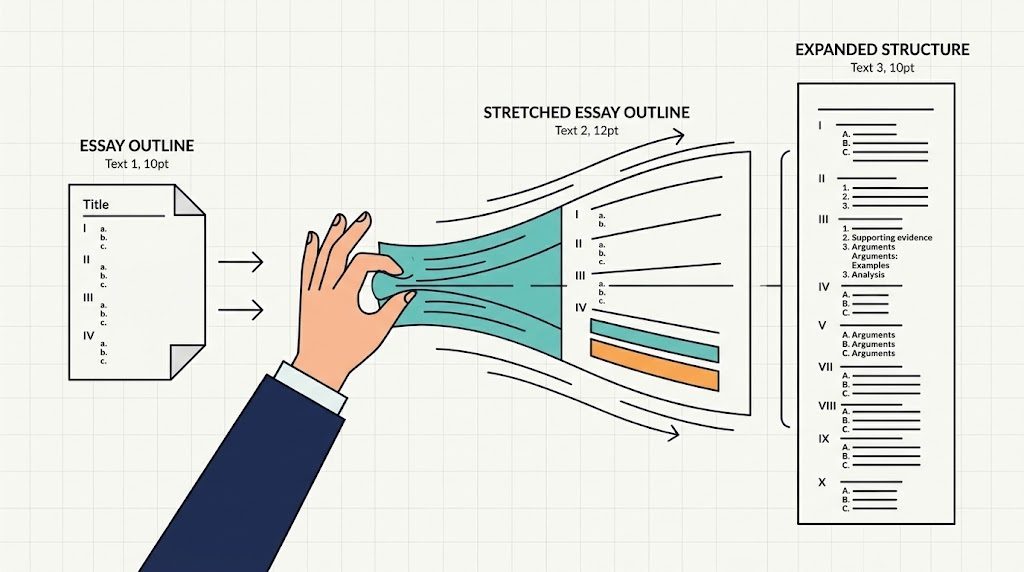
A five paragraph plan covers most high school narratives. Longer college assignments need more scenes, and the safest way to add them is to insert new slots rather than stretch existing ones.
Two Slots That Add Length Without Filler
The Flashback Slot
A short earlier memory placed just before the turning point, showing why the moment lands so hard. In the dealership story, it could be the father’s first job interview in the new country, when the writer was too young to help.
The Second Attempt Slot
One more failed attempt before the turn, which raises the stakes. Here, the writer could step outside to call an older cousin for help and get no answer.
Seeing how finished pieces of different lengths distribute their scenes makes this decision easier, and the narrative essay examples offer complete samples to compare against.
From Outline to First Draft
The outline pays off only when the draft actually uses it. Three habits make the handover smooth:
- Turn each scene line into the first sentence of a paragraph, opening with a place or an action.
- Underline every planted detail in the draft so none of them quietly disappears.
- Let the draft break the outline when a better order appears, then update the outline to match.
A narrative essay outline that keeps getting updated during drafting stays useful all the way through revision. The drafting stage itself is covered in how to write a narrative essay, which picks up exactly where a finished outline leaves off.
Outline Mistakes That Show Up Later in the Draft
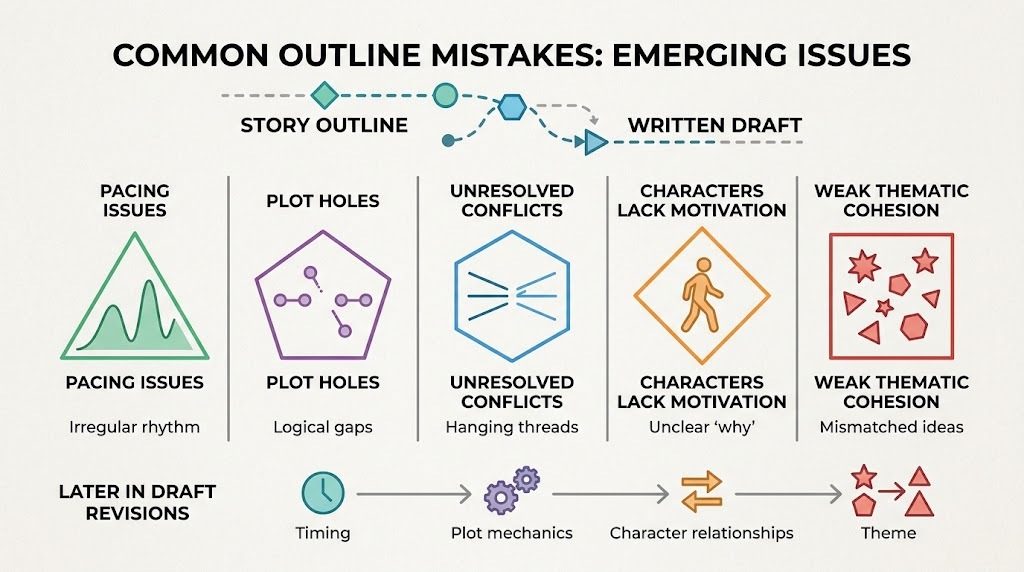
Listing Events Instead of Scenes
Why it happens: events are easier to remember than moments.
The fix: give every line a place, a time and one action someone takes.
Leaving the Turning Point as One Word
Why it happens: the writer knows the turn so well that “realization” feels like enough.
The fix: write the exact line, action or silence into the outline itself.
Scripting Every Sentence in Advance
Why it happens: a detailed plan feels safer.
The fix: keep outline lines to one sentence each, so the draft still has room to surprise.
Questions about choosing and shaping the story before any outline exists are covered in the main narrative essay guide.
Final Checks Before Drafting From the Outline
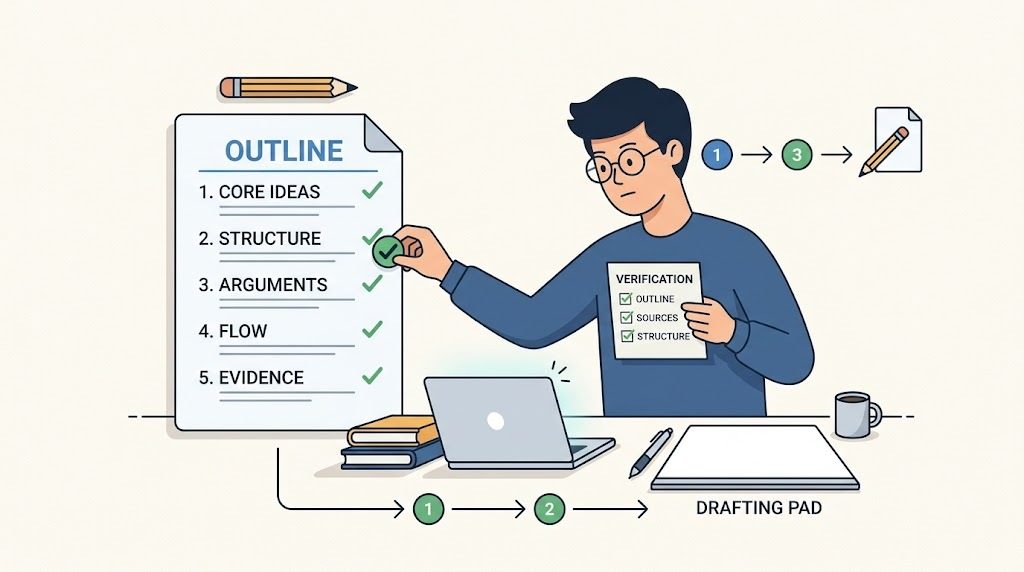
- Every bracket in the template is filled.
- The opening scene contains something at stake.
- Each middle scene has a clear job.
- The turning point is written as a specific line or action.
- Every plant has a payoff.
- The outline can be told aloud in about a minute without gaps.
Narrative Outline Questions Students Ask
How many paragraphs should a narrative essay outline have?
Most short narrative outlines plan five to seven paragraphs, one for the opening, three to four for rising scenes and the turn, and one for the ending. Let the scenes set the count rather than a template. If your story needs a flashback or a second attempt before the turn, add a slot for it.
Does a narrative essay outline need a thesis?
It needs a line for meaning, even if the thesis never appears in the essay word for word. Many narratives leave their point implied until the ending, but the outline should still state it privately. Without that line, it is hard to judge which scenes belong and which ones can go.
What is the difference between a narrative outline and a regular essay outline?
A narrative outline plans scenes, while a standard essay outline plans arguments or points. Instead of claims and evidence, you map places, actions, a turning point and an ending image. Narrative outlines also track details planted early that return later, something argumentative and expository outlines rarely need.
Do I have to submit my narrative essay outline in MLA format?
Only if your instructor asks for it. When an outline is part of the assignment, it usually follows the same style as the essay, including the header, font and spacing. The narrative essay format guide covers those page rules for both MLA and APA.
Can I change my outline after I start writing?
Yes, and you often should. Drafting reveals which scenes carry energy and which ones stall, and a better order sometimes appears only on the page. When that happens, follow the draft and update the outline to match, so it stays accurate for revision.