Build the thesis from change, not from the event alone
A narrative thesis should answer one deeper question: what became different because this experience happened? The event supplies the story. The thesis supplies the meaning.
A useful formula is:
[Specific experience] + [what changed] + [the insight or meaning that resulted]
For example:
[Working alone during a museum closing shift] + [forced the writer to make a decision without supervision] + [showed that responsibility often appears before confidence does].
This formula does not have to appear word for word in the finished essay. Its job is to keep the writer from producing a thesis that merely announces the topic.
Students who want support developing or revising a paper can use an essay service.
A narrative essay thesis can also be implicit. In that case, the opening creates the situation, the story develops the change, and the final reflection makes the central meaning unmistakable. The thesis still exists even if no single sentence states it directly.
Test weak and strong thesis statements side by side
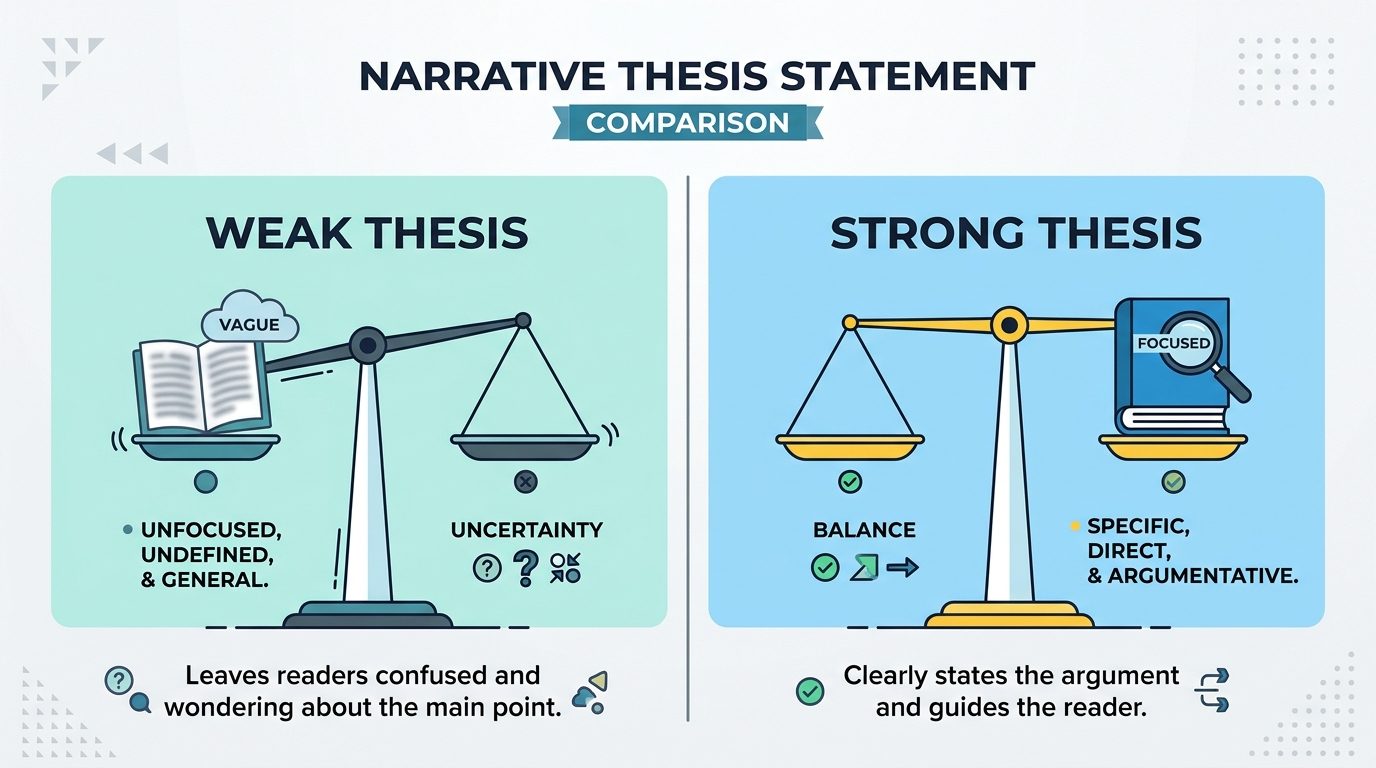
The fastest way to understand the difference is to compare statements that name an event with statements that explain what the event came to mean.
| Weak thesis | What is wrong | Strong version |
| My first night working at a radio station was stressful. | It reports emotion but gives no deeper direction. | Covering a silent radio booth alone taught me that preparation matters most when routine suddenly fails. |
| I learned a lot from volunteering at an animal shelter. | The lesson is too broad to shape a focused story. | Caring for one frightened dog changed my idea of patience from waiting quietly to adjusting my actions to what another living thing needed. |
| Losing my wallet was an important experience. | Important says nothing about the actual change. | Losing my wallet during a crowded train trip showed me how quickly independence can depend on asking strangers for help. |
| I made a mistake while working in the library. | The event is named, but its meaning is missing. | Mislabeling one archive box taught me that small routine decisions can carry consequences long after the moment feels finished. |
| Visiting my grandfather changed me. | The statement is vague and could lead almost anywhere. | One afternoon sorting my grandfather’s tools showed me that memory can survive through ordinary objects rather than dramatic stories. |
The stronger versions are not better because they sound more formal. They are stronger because each one gives the narrative a direction. The writer now knows which details matter and which details can be removed.
Students who want to see these ideas working inside complete scenes can compare the narrative essay examples page.
Decide whether the thesis should be explicit or implicit
Narrative writing has more flexibility than a conventional argumentative paper. The controlling idea can appear as a direct sentence, but it can also be revealed through action and reflection.
Use an explicit thesis when the assignment needs clear direction
An explicit thesis works well when the instructor expects an academic opening or when the narrative includes several scenes that need a clear point of connection.
A direct version might read:
Missing the final bus after ignoring three earlier warnings taught Marcus that independence depends less on refusing help than on recognizing when help is necessary.
The reader knows what change to watch for. The body of the essay then has to earn that statement through the story.
A direct thesis fits best when
- The assignment expects a clear academic claim.
- Several scenes need one obvious point of connection.
- The writer wants the central change visible before the story develops.
The narrative essay structure page is useful when students need to decide where the thesis, turning point, and reflection should connect.
Let the thesis stay implicit when the story can carry it
An implicit thesis works when the meaning becomes clear through a focused sequence of details. The writer does not need to announce the lesson before the reader has seen the event.
Opening without a direct thesis
By 6:15, every table in the repair shop was empty except mine. The customer had already returned once, and the wheel in front of me still leaned slightly left.
Meaning that emerges later
The essay can show the writer checking the repair again, admitting the problem, and learning to value accuracy over the embarrassment of starting over. The controlling idea is present even before it is named.
An implicit thesis fits best when
- The narrative stays focused on one compact experience.
- The meaning can emerge through action and reflection.
- Stating the lesson early would remove useful tension.
Students who need a process for turning that idea into a full draft can follow how to write a narrative essay rather than forcing the thesis to do all the work.
Use these 10 narrative thesis examples as models
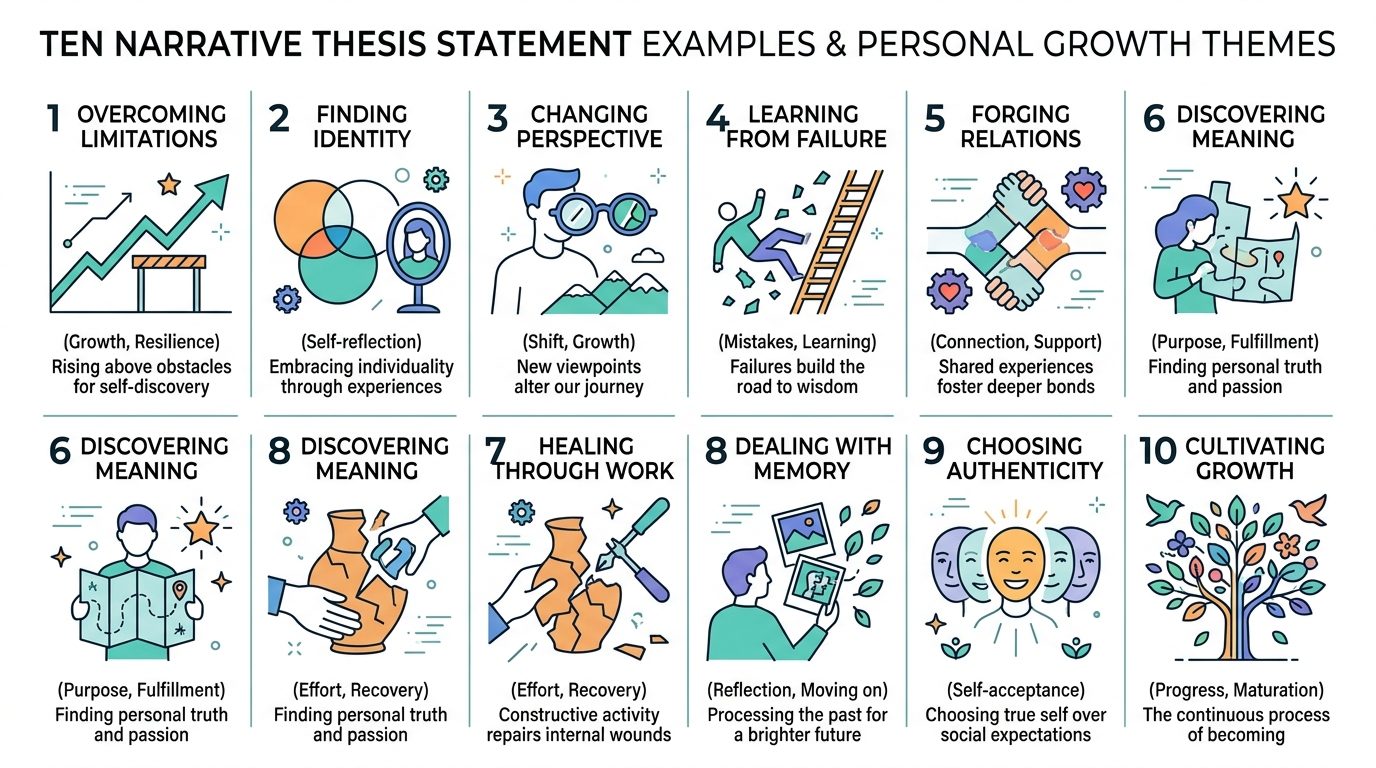
The examples below cover different types of personal change. Each one is specific enough to guide a story but open enough to allow scenes, details, and reflection.
Responsibility and work thesis models
- Closing a neighborhood bakery alone for the first time showed Lena that responsibility often means noticing small problems before anyone else sees them.
- Mixing two nearly identical seed packets at a community garden taught Amir that careful work is not about moving slowly but about knowing which details cannot be recovered later.
- Repairing a borrowed camera after damaging it forced Nora to understand that taking responsibility begins before an apology, with a willingness to fix what can still be fixed.
These statements point toward a sequence of actions. They do not merely say that work was difficult or useful.
The narrative essay outline page can help students turn a thesis into scenes without repeating the thesis in every paragraph.
Relationship and perspective thesis models
- Sorting a box of letters with an older cousin changed Daniel’s idea of family history from a collection of facts into a record of choices people rarely explain aloud.
- A tense conversation during a long car ride taught Priya that listening does not mean agreeing, but it can change what disagreement makes possible.
- Returning a borrowed coat after months of avoiding its owner showed Maya that embarrassment grows when silence is used to postpone a simple act of honesty.
Failure and adjustment thesis models
- Missing an audition because of a scheduling mistake taught Caleb that confidence cannot replace the ordinary discipline of checking details.
- Getting lost during a volunteer delivery route changed Sofia’s view of independence by showing that asking for directions can be a form of competence rather than failure.
Students still searching for an event with enough tension or change can use the narrative essay topics page to find a narrower starting point.
Objects and memory thesis models
- Finding an old bus timetable inside a donated book taught Elena that objects can preserve evidence of need long after their original purpose disappears.
- Restoring a scratched kitchen table with his father showed Owen that family memories are often attached to repeated ordinary actions rather than major occasions.
A useful thesis feels connected to one particular experience. If the same sentence could introduce fifty unrelated stories, it is probably still too broad.
Write the thesis in four short passes
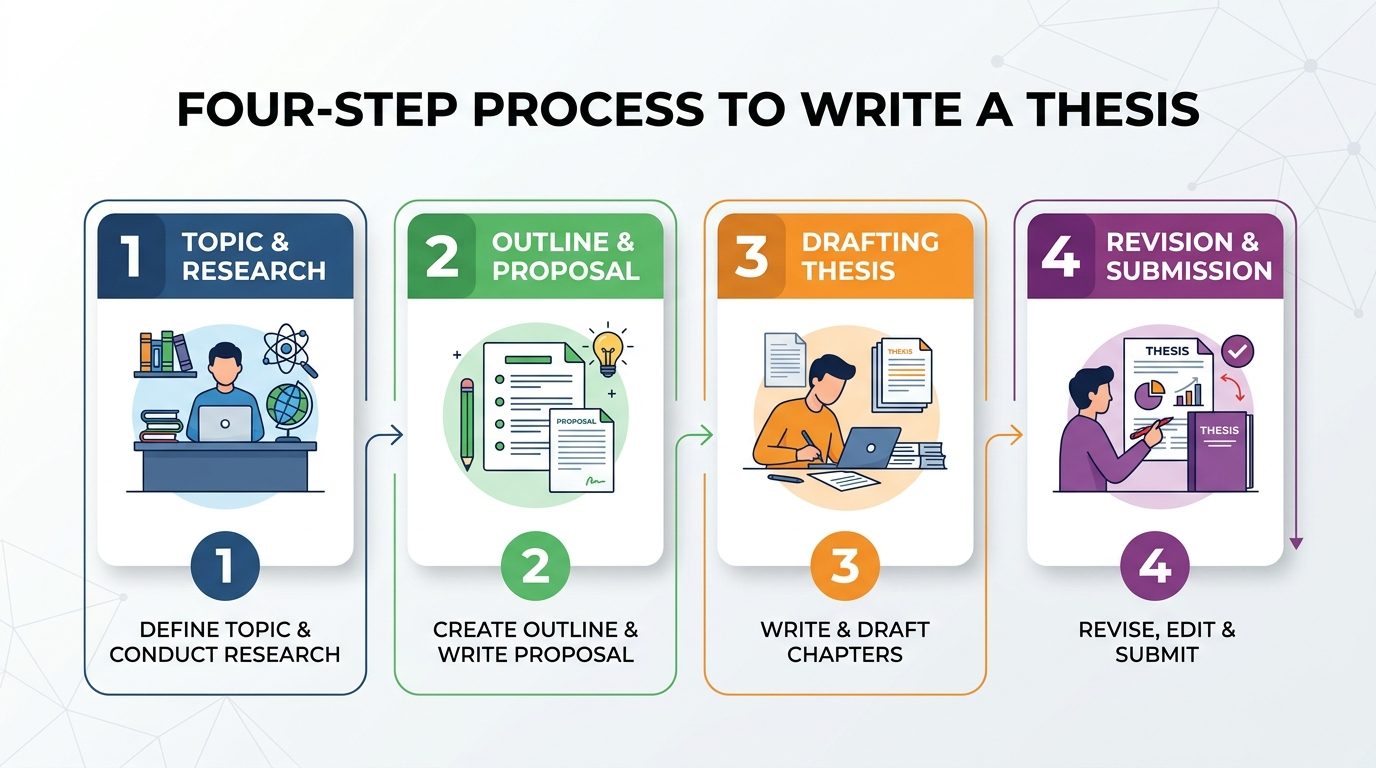
A strong narrative thesis is easier to build from the event outward than to invent as a polished sentence immediately.
Step 1: Name the exact experience
Avoid broad labels such as a difficult summer or an important friendship. Name one scene, decision, mistake, object, or encounter.
Working note: sorting damaged books during a library donation shift.
Step 2: Identify the change
Ask what the writer believed, did, or understood differently afterward.
Working note: stopped treating every discarded paper as meaningless clutter.
Students can use the narrative essay format page later for page setup, dialogue, and citation rules. Those choices should not shape the thesis itself.
Step 3: Find the reason the change matters
Move one level deeper without turning the idea into a universal statement.
Working note: ordinary objects may contain information that matters to someone else.
Step 4: Combine and trim
The first draft might be:
Finding a handwritten timetable inside a donated library book changed Elena’s habit of treating forgotten paper as clutter and showed her that ordinary objects can carry evidence of what someone once needed.
The sentence is specific, arguable through the story, and connected to an observable change. Nothing in it requires the writer to claim a grand truth about life.
Keep the thesis from sounding like a moral at the end of a fable
Narrative theses often become weak when writers reach for a lesson that sounds larger than the actual experience.
The thesis says that everything happens for a reason
Why it happens: The writer wants the experience to sound meaningful, so the lesson becomes universal.
The fix: Replace the universal claim with the exact change in behavior or understanding that the event produced.
The thesis only repeats the assignment topic
Why it happens: The writer names the experience but stops before explaining why it matters.
The fix: Add the before and after difference. A trip, mistake, conversation, or job becomes a thesis only when the writer identifies what changed.
The thesis explains more than the story can prove
Why it happens: The statement makes a large claim about trust, courage, family, or success, but the essay contains only one small event.
The fix: Reduce the claim until the scenes can actually support it. A narrow insight usually feels more credible than a dramatic life lesson.
The final reflection introduces a second thesis
Why it happens: The essay starts with one idea, then the ending reaches for a different message because it sounds more impressive.
The fix: Check that the opening, turning point, and final reflection all point toward the same central change. The wording can develop, but the core meaning should stay connected.
The broader narrative essay page can help students check whether the thesis still fits the purpose of the genre rather than drifting into argument or summary.
Run a seven point thesis check before drafting
A useful narrative thesis should pass these checks:
- It focuses on one specific experience rather than a broad period of life.
- It identifies a change in understanding, behavior, or perspective.
- It gives the writer a reason to include some details and cut others.
- It avoids generic lessons that could fit almost any story.
- It can be supported by the actual events in the essay.
- It leaves room for the story to develop instead of summarizing every scene.
- It still makes sense when the final reflection is compared with the opening.
If a thesis passes these checks, the writer has more than a topic. The essay has a controlling idea that can guide selection, pacing, and reflection without making the narrative sound mechanical.
FAQ
Does a narrative essay need a thesis statement?
Yes, a narrative essay still needs a central controlling idea, but it does not always need a formal thesis sentence in the opening. You can state the thesis directly or let it emerge through the story and final reflection. The key is that the experience should lead toward one recognizable meaning.
Where should I put the thesis in a narrative essay?
You can place an explicit thesis near the end of the opening paragraph, especially when the assignment expects clear academic direction. An implicit thesis may develop across the story instead. In either case, the turning point and final reflection should reinforce the same central idea rather than introduce a new one.
Can a narrative thesis be one sentence?
Yes, one sentence is usually enough for an explicit narrative thesis. You should make that sentence specific rather than trying to summarize the entire essay. A useful thesis names the experience, the change it produced, and the meaning of that change without listing every event that will appear later.